.

Showing posts with label gardening. Show all posts

10 Most Visited Garden Posts in 2013

It's always fun to go back and look at the year.  It helps to examine what went well or what didn't.  Usually I end the year with a post on how my garden projects went but this year I thought I would mention what the top posts on Growing The Home Garden were for 2013.  Once our newest arrival came along my project time became very limited and I just didn't accomplish that much!  Below you will find the top ten garden posts visited in 2013 on this blog.  While many of these posts were written before 2013 they contain content that seems to remain popular over the years.  I hope you enjoy looking back at these posts!

Designing a Raised Bed Vegetable Garden: 11 Things to Think About
In this post I wrote some tips to designing a raised bed garden.  There are things I learned over the first couple years of gardening that I thought would be very useful for those who are just setting up their raised beds.

Making A Dry Creek Bed Drainage Canal
The dry creek bed post being so popular this year really surprised me.  Someone posted it to Pinterest and a lot of folks thought it was worthy of pinning.  Thank you to everyone this year who has shared something from this blog this year.  Sharing our content is one of the best ways to show you appreciate a blogger's writing.  The dry creek bed post was about a small project I made to divert rainwater from a gutter away from the house and make a bed more suitable for sedums.

Propagating Rosemary In Water
I love propagating plants and lots of people love rosemary so it's no wonder this post did well.  Rosemary is very easy to propagate.

Why You Should Plant a Bradford Pear Tree But Some People Do Anyway
Don't plant a Bradford Pear Tree.  Just don't.  I won't go into the reasons why you shouldn't plant one here but if you are interested in learning more you can read the post.

Coleus Cuttings: Are they the Easiest Cuttings You'll Ever Root?
Coleus very well could be!  Coleus is another very, very, very easy to propagate plant.  It's a perennial that you can overwinter indoors by taking a few cuttings.  Then you can plant the saved cuttings outdoors to grow another year.  It also grows very easily from seed but you don't have the advantage of knowing exactly what it is going to look like!


Visiting the Mother Plant: Japanese Dappled Willow
I'm a fan of the Japanese Dappled Willow 'Hiroku Nishiki'.  It's an easy to grow shrub that can create a deciduous privacy screen in just a couple years.  If I were to do the border over again I would mix in some evergreens and some fruiting shrubs for a mixed border but the dappled willows have done a wonderful job at providing a summer privacy screen.  Willows also propagate very easily!

Best Materials for Building Raised Bed Gardens
There are lots of ways to build raised beds and in this post I wrote about a few of the best materials for them.  Every material has its strengths and weaknesses.  The better materials tend to cost a bit more but last longer over the years.

Garden Designs and Layouts
This is a small collection of raised bed layouts and designs.  Some of the designs were implemented in my garden at some point but others are just speculative designs put together over the winter while longing for spring! Maybe some of these will spur some ideas for your vegetable garden this year.

How to Propagate Salvia from Cuttings
I love salvia in the garden.  So do a lot of people although many apparently like it for reasons other than its aesthetics!  It's a beautiful plant that in its culinary form is great for dinner dishes but otherwise provides great ornamental value and serves as a pollinator magnet!

Crape Myrtle Propagation By Cuttings
Here in the south crape myrtles are a must.  These prolific summer blooming trees are easy to grow from cuttings or from seed.  If you would like to learn how please take a look at the post!


I want to thank you for reading Growing The Home Garden this year.  Whether you subscribe, follow on Facebook, Twitter, or Pinterest your visits, shares, and comments have greatly contributed to this blog and I can't thank you enough.  Because of you and people like you we've had over 280,000 visitors this year!  It always astounds me when I look at the numbers.  Thank you again for all you do and I want to wish you the best of luck in 2014!

Have a Happy New Year!

Maintenance-Free Gardens: Everything You Need to Know (Guest Post)

Maintenance-Free Gardens: Everything You Need to Know

A flower garden in full bloom is every gardener's masterpiece. And like most great masterpieces, each brush stroke is calculated, the color palette chosen in advance, and the overall composition exists in the artist's mind well before touching brush to canvas, or in this case, trowel to soil.

Although we all appreciate the beauty of a healthy garden, few actually take the time to create their own. Perhaps it is the unwillingness to devote hours each day tending to the garden that stops most people. But the best gardens are virtually maintenance free, and with proper planning you can create a masterpiece garden that requires minimal upkeep. Just follow the tips below:
  • Tangling With Weeds
Weeds are every gardener's enemy, and many a gardener spends his days battling them on every front. However, with a little preemptive strategy, most of these battles can be avoided. Weeds sprout up in new gardens because their roots were hiding below the otherwise pristine looking surface. So make sure you eradicate these roots from the very beginning. Dig up all the soil in which you will place your garden. Dig deep enough to reach all the roots. Turning over the soil will dry up roots and prevent weeds from running rampant in your new garden.
  • Paths Offer Potential
A common mistake many gardener's make when hastily planting a gardening, is to inadvertently block off sections of the garden. This will cause headaches in the future, especially if you're forced to climb through prickly bushes every time you need to prune your favorite shrub. There's no need to bushwhack through your own garden. Instead, integrate pathways through your garden. Stepping stones or even paved walkways will allow you to reach each section more easily. You might even consider hanging those pawleys islands hammocks in a secluded nook. Garden paths greatly expand your garden's potential.
  • Place Needy Plants Nearby
Remember that favorite shrub hidden in the back of the garden? If you had placed it in front of those prickly bushes, pruning wouldn't have been such a hassle. Some plants need more attention than others. Why not plant them in the most convenient place possible? This will make your gardening experience much more enjoyable.
  • Make a Lawn for Mowing
When it comes to mowing the lawn, all yards are not created equal. Some lawns seem to take forever to mow despite their small size, while other much larger lawns are a breeze to mow. Designing a lawn without sharp angles and multiple obstacles will make mowing easier. Stick to slowly curving edges and rounded corners. If you can mow the entire perimeter without stopping and turning, then you will love mowing your lawn.
  • Moveable Plants Add Depth
Keeping some plants in containers is a great gardening strategy. Not only are decorative pots attractive additions to your yard, but they also allow you to rearrange your garden effortlessly to create a new look. Additionally, pots increase the types of plants you can keep in your garden. Even those plants that are a little fragile can appear in your garden, because you'll be able to move them to safety in the event of a heavy rain or sudden heat wave.
  • Go Native and Save on Water
Native plants offer advantages over non-native species, because they are well adapted for the climate. This means they will not need daily flooding to stay healthy, and this will save you from a hefty water bill. Of course, you don't need to limit yourself to native species, but keep in mind the water needs of each plant you do choose. Keeping thirsty plants together will make watering much easier.

Integrating drip irrigation into your garden plan is a real time saver. Pair it with a lawn sprinkler system, and your watering needs will be virtually maintenance free. Of course, the expense of this might be prohibitive for some. Fortunately, soaker hoses are a great alternative. Regardless, of the watering method you decide on, consider it during the design phase to best implement it into your garden.
  • Pruning Keeps Plants Healthy
Pruning is essential to keep many plants healthy, but you can limit the time required to prune by choosing low maintenance plants and by pruning for the right reason. Some people choose fancy, artificially shaped plants, only to discover it requires lots of effort to maintain their original shape. Instead of pruning for for aesthetic appeal, prune with the health of you plants in mind. Additionally, many plants require little pruning. Those that grow more slowly generally require less pruning.

Closing Thought: By visualizing your perfect garden and creating a composition well before playing in the soil, you'll be able to create a garden environment, which is time efficient, easy to maintain, and a pleasure to look at. So what are you waiting for? Get out there and design your own masterpiece garden!

Author Biography:

Jay Chua is an online publisher and passionate gardener. When he's not tending to his own garden, he's reading and writing about gardening or working on his website, PorchSwingSets.com, which provides useful information on many of the newest and greatest backyard seating options. His site offers reviews that can help readers decide on the right hammock chairs stand or choose between the best metal porch swing.

Garden Thoughts: A Gardening Equation

(Time x (Knowledge + Experience) x Money )= Your Garden

How successful is your garden? I think you can tell just by observing the outcome, but there are elements that go into it that effect your desired outcome.

Time to me is by far the most important. The amount of time spent planning, weeding, planting, propagating, or even researching play a huge role in what you get. With enough time you can grow large trees from small saplings, perennials or annuals from seed, or propagate plants from cuttings. Your knowledge and experience is a factor, but each time (there is that time word again) you try something new you increase your experience and learn something new! With experience and knowledge you can find other gardeners to exchange plants or seeds. You could even get help in landscape planning from garden clubs or other gardeners.

Instant gardening gratification can be achieved with enough cold hard cash, but you don't have to have a lot of money to be successful. Every now and then you will see a plant you can only find at a garden center or nursery and you may spend some money there. You may even spend a little on dirt, mulch, or containers. If you compost (experience, knowledge, and time again) you get free super powered dirt and you won't need fertilizers. You can even collect rainwater to reduce the cost of watering your garden. Knowing how to cut your lawn will help your grass grow without using fertilizers. Knowing what the plant requirements are will help you to figure out the best plants for your climate. Money can be the least of all factors but time is by far the most important!

The 5 Hats of the Gardener

As a gardener you will find that you wear many hats.  We aren't talking about fedoras, ball caps, or even straw hats here. We're talking about the different roles you will be called to fill as a gardener! Gardening isn't just about sticking a plant in the ground and watching it grow (although there is always some of that), gardening is a many faceted field with strong influences in areas from design to science.  Let's take a look at 5 of the many hats a gardener must wear!


The 5 Hats of the Gardener


The Hat of the Garden Designer


Gardeners are landscape designers.  As a gardener you have to make good decisions on plant placement, hardscaping, landscape lighting, garden structures like arbors or pergolas, and the layout of your garden.  We try things.  We fix things.  We tear down things and start all over!  (I've done that a more than a few times.) We aren't always perfect in our design decisions but we are designing gardens and learning.  Sure you can hire someone to come and design the garden but even then you make a lot of the decisions about what you want in the garden for landscape features or what you want to plant.

The Hat of the Farmer


You may not have a tractor, or even an acre of land but if you grow plants you're a farmer.  It may be small scale but everything you grow is an effort in agricultural cultivation!  The vegetable garden in your back yard is a perfect example of your farmer's hat.  You might grow tomatoes, peppers, lettuce, cucumbers, or maybe herbs as a farmer. Maybe you have a few fruit trees you harvest from each year.  Strawberry plants in the planter on the back porch count.  Do you plant and harvest from pots, raised beds, or rows in the ground?  It really doesn't matter - you're farming!  Farmer's cultivate the soil, grow the plants, harvest the produce, and bring it to the table.

The Hat of the Plant Pathologist


Into everyone's garden a disease must occur.  It's a gardening rule that however much I wish could be broken will never be!  You will get a fungus, I promise, but you will also learn how to defeat it or work around it.  You'll end up with dead plants - it's impossible not to!  I'm not telling you this to make gardening sound difficult or pointless but to encourage you to put on the plant pathologist hat!  Research those problems when the occur and learn how to treat them.  If they can't be treated then learn how to prevent the diseases in the future. So many plant diseases can be prevented with the proper gardening techniques.  Pests will bother your garden too and you'll have to find a way to get rid of those damaging voles or the grazing deer who love eating your hostas.  Part of your role as a gardener is to solve these mysteries. Be the plant detective!

The Hat of the Landscaper


The landscape maintenance technician is another gardening hat you will be called to wear.  Even if you have no lawn - you have trees that need pruned, weeds that need weeded, shrubs that need trimmed, more weeding, garden beds that need edged, plants that need planted, leaves that need rakes, even more weeding, or any one of a hundred different things landscapers do. All that regular maintenance falls on your shoulders as a gardener, and that's how we gardeners like it!  Well maybe without the weeds...

The Hat of the Nurseryman


Perhaps this is my favorite hat to wear.  Everyone of us gardeners has a little bit of the nurseryman inside.  Have you ever divided a hosta plant?  Or planted tomato plants from seed?  Maybe you've tried growing plants from cuttings, layering a hydrangea, or potted up plants to give to a friend?  All of these things fall in the nurseryman's field.  Obviously part of the nurseryman's job is to produce a profitable plant but there is a whole lot more to it.  Planting the first seeds of the spring at the right time, preparing cuttings, and then growing the plant on to become larger enough to survive in the landscape.

At some point you will wear each of these hats and most of the time you'll probably being wearing at least three at a time! Gardening is part art, part science, and everything in between.  What gardening hats can do you wear?


More from the Friday Fives


Today's Post featured my 2 year old son Sam! Cute isn't he?

A Few Gift Ideas for Gardeners

It's that time of year when we're all struggling to come up with great ideas to give our favorite people. I've always found that the best gifts are those that you can use on an almost daily basis. A couple years ago at Christmas I was given an iron skillet. I thought for second "wow, an iron skillet." It certainly didn't seem to be the most exciting thing in the world.  It wasn't a fancy video game system (not that I need one of those - I don't have time for one), nor was it a spiffy GPS (I didn't really need one of them either as I don't travel and an atlas is good enough for me), and it wasn't that new high tech gadget that I couldn't live without!  But you know what?  I use that iron skillet just about every other day of the year.  It's my primary cookware for cooking anything from potatoes to bacon or from sauteing to braising.  It's been great!  That's what gifts should be: something that recipient of the gift can use everyday.

The nice thing about gardening gifts is that they do get used nearly everyday by the gardener.  Six years ago I was given a shovel.  A seemingly ordinary shovel with a wooden handle.  The blade on this shovel has stayed almost magically sharp without assistance from the gardener, nor has the handle ever broken despite heavy clay and daily use by the gardener.  It's just a simple quality tool that has given this gardener tons of productivity!  Every shrub or tree in our garden has been planted with that shovel as well as other projects like the excavation for the patio and the numerous redesigns of the vegetable garden!

What gifts should you get your favorite gardener for Christmas this year?  You have lots of options, so lets look at a few ideas.  (Some of the links below are affiliate links and if you use them, thank you! ☺ )

Gardening Gift Ideas!


Seeds

Seeds are an awesome gift for any gardener.  Whether they put food on the table of flowers in the vase seeds make every gardener get excited.  I typically only get seeds from Baker Creek Heirloom Seeds or Renee's Garden.  Both companies offer quality seeds at very reasonable prices.  I don't have any affiliate relationship with Baker Creek but have been sent trial seeds from Renee's.  I've been very pleased with the results from both companies.  You can also order from Renee's Garden on Amazon if you prefer to do your shopping there.  Get several types of seed and put them together into a collection of seeds or use them as stocking stuffers!  Here are a few seed collection ideas: Spring Garden, Cut Flower Garden, Perennial Garden, Butterfly Garden, Herb Garden, or just a mixed Vegetable Garden.

Garden Tools

Garden tools are a great gift for both new and experienced gardeners. A new gardener doesn't always know what they need for gardening so why not put together a collection of useful handtools with pruners, spades, cultivators, scissors, labels, gloves or anything else you think would be useful. Even experienced gardeners who already have that equipment can use updated tools.  I go through 2-3 pairs of gloves each year so I know how great a present that they can be! Larger tools are good too but a little harder to wrap. (Here are some Garden tools from Amazon.)


Compost Bins

What gardener doesn't like compost?  Compost is an excellent garden additive that feeds the soil that feeds your plants.  There isn't a better way to dispose of your kitchen waste!

Compost Tumbler
from Gardener's Supply
You can build a pretty nice compost bin if you're a DIY kind of person to give to your gardening friend.  Three bin systems work very nicely to organize the new compost and turn it easily.  You can also find compost tumblers or other types of bins that will do the job of turning your leftovers into gardener's gold. If you have a gardener who likes worms investigate a worm bin. Or make a homemade worm bin yourself! (Compost Bins from Amazon)

Rain Barrels

A rain barrel is a very nice thing to have.  Keep in mind it only works if you have rain but it does allow you to use natural water rather than the tap for a longer period if you have drought conditions.  A roof is a very large and non porous surface area that makes a great collector for rain so why not use it?  I use a Fiskars Rain Barrel that has done a great job over the last few years.  If the weather forecast calls for rain I empty as much as I can into milk jugs for storage then let the rain barrel fill up again. (Rain Barrels from Amazon)

Bird Houses and Feeders

You can easily make your own birdhouses with a just a little wood working skill.  I've used cedar fence boards to make blue bird houses which make great gifts!  Bird feeders can be homemade too.  Most gardeners enjoy bringing wildlife to the garden and birds are a favorite.  Finch feeders, hummingbird feeders, or squirrel proof feeders are all great options! (Bird Feeders from Amazon)

Books!

Books are great gifts, but you probably already knew that. I've recommended a couple books on plant propagation before but there are lots of other options to choose.  Look for a niche that your gardener has an interest in like roses, bonsai, hydroponics, or herbs.  There's a subject for everyone!  What makes a great book for a gardener?  One with great content and great pictures.  I love seeing ideas on the page as they are implemented with an explanation attached. (Gardening Books on Amazon)

If none of the ideas above sound just right consider a gift card to your favorite local nursery!  What gardener won't enjoy that?  Keeping it local is a great way to help your community too.

I hope this post has given you some useful ideas for your Christmas gift selections but I realize that if you are reading this then maybe you are the gardener!  So share this with your significant other and be "surprised" this Christmas with the great garden gifts you might receive!

For Next Year

I know most people have already put their tools away and their beds are ready for winter. It may be too early to even think about next year, but the off season (winter) is planning time for next year. It's time to figure out what worked for the 2007 season and think about what to plant in 2008. The University of Tennessee Gardens website has some great information about annual plants from their 2007 annual plant trials that may help the planning process. They tested the same annuals in Jackson, TN and in Knoxville, TN then rated them for June, July and August. On the site they show the rating for each location on a scale of 1-5 (5 being the best) and gave an average of the two locations. This information is a very good resource for a gardener wanting to find a new annual to put into the garden next season. They also include a picture of each plant with the results.

Take a look at the trial results: University of Tennessee Gardens 2007 Annual Trials

Some more plants!

Today I stopped by one of our big box home improvement stores and visited the declining stock in their gardening area. I've mentioned before about the good deals you can find there and so today I found a couple deals! While they are desperately cleaning out their summer and autumn wears to make room for Christmas trees, I picked up a couple of perennials to add to our gardens.

The first is one I think everyone should try somewhere in their landscape: Russian Sage. This variety is called Longin Russian Sage. It is supposed to be a more upright variety than other kinds of Perovskia atriplicifolia. Russian sage has silvery colored stems and feathery foliage highlighted by lavender colored blossoms that create a showy display in the summer. Planted in mass, Russian sage is very impressive and as a perennial it is very easy to grow. I put two others in this summer and each pruning cut brought forth vigorous new growth. I paid a whopping $1.00 each! One other note about Russian sage, it seeds very readily so you can either transplant the seedlings to another location or let them grow to form a mass of perennial power!

My other find was 'East Friesland' Salvia (Salvia nemerosa '). I picked up two of these salvias for $1.00 each. They should bloom next year with dark purple flower stalks and will stretch 18-24 inches tall. I put these two plants in my butterfly/birdbath garden where they should blend with the coneflowers and butterfly bush I have there. All of these plants were bought on the discount rack this season, including an ornamental grass called Miscanthus sinesis 'zebrinus' or Zebra grass which rests in the same bed.

Being perennials all four of these plants should overwinter well and bring forth great flowers next season!


I Like the Islands!

Earlier this week I spent an afternoon outside with my oldest daughter who had a half day off from kindergarten. She was running around outside and playing on the swingset while her brother (our youngest) was napping in the stroller nearby. Since he rarely ever naps I was not even remotely tempted to tempt fate by moving him indoors and stayed outdoors looking for something to do. Let me just say that something to do is never far away!

What I ended up doing was completing a new island bed that I worked on earlier in the summer. I'm a big fan of using multiple island beds to break up the yard into smaller sections. Every time a new island garden is added it creates a new zone along with new pathways to walk down. I've always thought of pathways in the garden being just as important as the plants in the garden. The paths take you places and create a structure for organizing the garden. They can be as natural or as formal as you want them to be as long as they lead you onward through the garden.

Before this island was just a single viburnum (Viburnum dentatum). Then I added a yellow knockout rose I bought on a discount rack. I spaced it out several feet away from the viburnum with the intent to fill in the gap in between with mulch and other plantings later. A couple months passed by and I had a minor inspiration. I went over to my 'Husker's red' penstemon and used the easy propagation method for propagating penstemons. Then I brought 6 small rooted sprigs of penstemon and spaced them out between the viburnum and the rose. Eventually I'll have to move them when the viburnum spreads too wide but I enjoy having to do that since every time I move plants I end up with extras - funny how that works! I also divided a ponytail grass (Stipa tenuissima) into three sections and replanted it into a larger mass planting. Since I saw those for almost $4 a piece in the stores this year I may have saved myself $8 with that minor little task (They divide very easily.)

Here is the end result after dividing, planting and mulching.


By spring everything should be settled in and ready for new growth. There is a purple coneflower that was the result of an "I need to plant this somewhere, oh this spot looks good" moment. Usually when that happens I end up having to move it later! The bags of mulch that I used were broken open at the store and I received a discount for purchasing them and since most of the plants were free this small garden expansion cost less than $10. Originally the viburnum was also a discount rack find which I have been thrilled with each of the last two years. Who says discount plants don't work out?


Planning Your Next Garden: Evaluate the Garden

The calendar hasn't said so yet officially, but winter weather is already here. As I write this post sleet is spitting through the air outside. Fortunately I have a pot of hot coffee available to offset the cold. What should a gardener be doing on these cold "winter" days when the garden isn't suitable for enjoyment? Cold winter days mean that it is time to plan the next garden. It's time to take what you learned from this year and plan how you want to do next year's garden better, bigger, and more efficient. Today I thought I would tell you about my thought processes for planning the next round of gardens. I'm mainly talking about the vegetable garden but you can adapt the thoughts in this post to herb gardens, cutting gardens, native gardens, or any other type of garden.


Planning a garden begins with evaluating the current and past gardens 


Evaluate your garden problems.

Every year you garden you will learn things. Maybe a plant did fantastic and you figured out exactly how to grow it, what conditions it enjoys, how productive it can be, or the right site for it, but maybe it didn't do so well. Maybe that plant failed miserably. (Don't worry about it I've screwed up quite a few plants over the years!) The experience can be turned from a failure into a positive learning experience simply by evaluating what went wrong. It's time to ask yourself some questions:

  • Did I have a pest problem? 
  • Was there a watering issue? Was there too much rain or too little rain?
  • Was enough fertilizer used? Did I use too much?
  • Did I time the fertilizer correctly?
  • Does the soil have enough organic matter?
  • Did I space my plantings properly?
  • Did I mulch my plants?
  • Did I stake the plants properly?
  • Did I spend enough time in my garden?

Those are just a few of the many questions you could ask yourself about your garden. It's not important that you micro-evaluate every little thing about your garden but rather that you get a general idea of what may have caused the problems your garden experienced. If you can identify the problem you can find a way to fix it!

how to grow great summer squash
5 Tips to Grow Great Summer Squash!


How Did Your Garden Produce?

Evaluating your garden isn't just about the figuring out the problems but also find out what you need to grow. Maybe you were giving your neighbors a daily dose of zucchini. In which case your neighbors may have mysteriously stopped answering the door...or moved...

Designing a garden: Things to Think AboutIt's also possible that you grew 4 tomato plants and you didn't have enough leftover to can some for the winter. Maybe you realized that you really don't like broccoli after all and the 25 heads you brought in from the garden was too much. It could be that you noticed that you used all the onions from the garden in your cooking too fast and need to grow more. There are many situations where you need to evaluate what you grew and how your garden produced.

Make a list of the vegetables you grew then make a few notes about their production. Keep it all related to what your needs are. If your family needs more peppers next year then make a note of it. If you need fewer zucchini plants (or need to successively plan them better) then take note of that too. Also include anything you didn't grow but might want to next year. Just keep the list simple.


Evaluate the garden space


There are efficient methods of laying out your garden design and then there are aesthetic methods to layout your garden design. Sometimes they overlap but often they don't! Ask yourself:
What could make the garden more efficient? The proximity of garden areas can greatly increase your efficiency. Your garden probably has a few critical elements for efficiency in its design:
  • Garden Beds
  • Compost Bins
  • Storage Areas
  • Water Sources
If your garden is small then this won't matter nearly as much, but having these areas close to one another can reduce a significant amount of wasted time in hauling hoses around, moving compost, and getting equipment. Ideally your garden will be centralized in relation to all the other elements but unfortunately sometimes the best situation for our gardens is not the best one for efficiency! In all things do the best you can!


Evaluate your garden tools


Do you have the best tools for the job? Is there something else that might work better? Are they cleaned and sharpened? If you take a few minutes to maintain your tools that may be all you need to significantly increase their efficiency!

Evaluate your garden's ultimate goal


Every year I set out to try something new in the garden. My goal is often simply to learn more about the plants I am growing and to figure out the mystery of growing a vegetable or a plant. It could be your goal is similar, but maybe your goal is grow enough food to donate to a local food bank. Maybe your goal is to sell produce at a farmers market and make a small profit. Whatever your goal was for this year try to figure out how well you met your goal and what was the difference between what you accomplished and what you hoped to accomplish.

Evaluating your garden shouldn't be something that is a tedious chore. Take some pleasure in thinking and reminiscing about your successes and even your failures. When you evaluate the garden you learn from it. When you learn something you'll know how to do it better when you plan your next garden.


Helpful Gardening Hints: Newspaper

If you are tired of hauling your old newspapers to the dump or recycling there are a couple good uses of it for around the house. First its important to note that newspaper is biodegradable and most of the inks are soy based so there will be no harm to the environment. In fact the newspaper should add to the organic content of the soil.

Idea #1
Use the newspapers to make paper pots. The pots are biodegradable and relatively easy to make. First gather your newspapers and an appropriately sized can. A soda can or vegetable can will work fine. Whatever size can you choose will determine the size of your pot. Then tear a suitable size strip of newspaper lengthwise. Next lay the can on the newspaper so that long strip of the newspaper will wrap around the rounded parts of the can. Be sure to let some newspaper hang over to cover the bottom of the can. Wrap the newspaper around the can and fold over on the bottom and there is your pot. Fill it with dirt and set it in a flat or a tray so that the pots hold together well. When you water these in the tray do not water the pots themselves, just put the water in the tray and it will gradually seep up to the top of each pot. When you are ready to plant them just bury the pot and all into the ground. It will decay gradually.

Idea #2
Rather than dig up an area to lay a new bed, use newspaper then cover with mulch or dirt. First mow the area as short as you can. Then layer 3-5 sheets of newspaper to make it thick enough to block any weeds from coming up. Cover all gaps between the newspapers (if you don't the weeds will come back). The newspaper and grass will degrade and will help improve the quality of your topsoil. It will take about 4-8 months for the newspaper to degrade. It all depends on how much water the area gets.
You can use this around trees. I like to remove the soil around the trees in a 3 foot circle first. Then leave a small open area around the tree itself, maybe 8"-12" or so. This is so the moisture can easily get to the root ball of the newly planted tree. Then lay the newspaper around the outside of the hole to prevent weeds and cover with mulch! If a weed does pop up, it's usually pretty easy to remove once you've done these hints. I hope you can use this in your garden!


Discount Plants!

I have been known to surf through the local big box home improvement store garden center for discount plants. I found all sorts of mums earlier in the fall for $0.50 each. All they needed was a little trimming and dead heading and they were good as new.

I've found Viburnums and Russian Sage this way also!

Today I found a 10-12 foot tall weeping willow for $15. Marked down over $20 from its original price. All it needed was a little dead wood pruning and its good as new!

Usually the stores don't want to take the time to care for ailing plants so they discount it to try to get rid of it. That's where a gardener who is patient enough to nurse the plants back to health can get a great advantage. :)

2007 Gardening Season

Summer of 2007 has been a tough one for gardening in Tennessee. We had a major shock in the spring with warm temperatures then a harsh freeze that killed and crippled many plants in our region. Then to add insult to injury we experienced drought and extreme temperatures. Hopefully with fall arriving and cooler temperatures we'll get more water to help improve our drought.

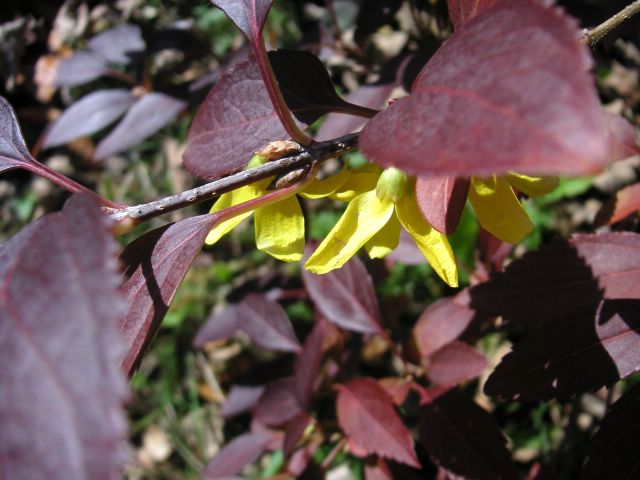
Fall foliage and spring bloom. Spotting this prompted me to take out my camera and shoot some fall pictures from my garden.

Update: This is a forsythia, deciding to flower in the fall. Unexpected beauty and surprises are bonuses to all gardeners.Posted by Picasa

I added a herb garden next to the back deck by burying, at different depths, some large clay drainpipes from the farm. The boys dug the holes and placed the pipes last spring in pouring rain, a memory-making event. Posted by Picasa

Sedum and grass. I like the way the sedum pulls out the red in the grass and its a nice combination of succulent rigid foliage and swaying grass even when it isn't blooming. Posted by Picasa

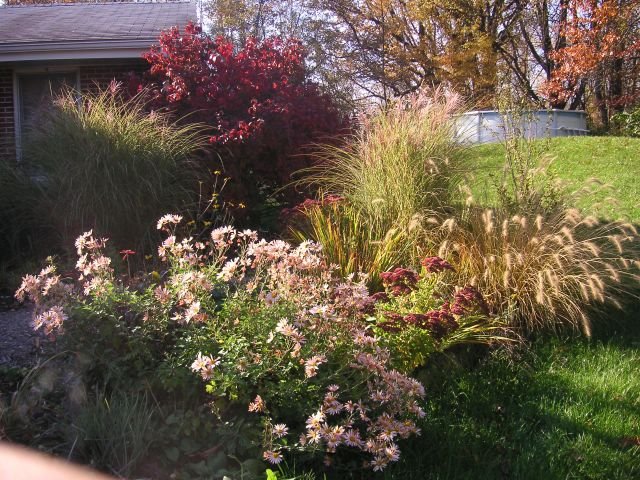
Part of my front yard and part of my finger. I love the colors in my garden this time of year. A close-up of the mum, which I only had time to trim back once this spring) follows. Posted by Picasa

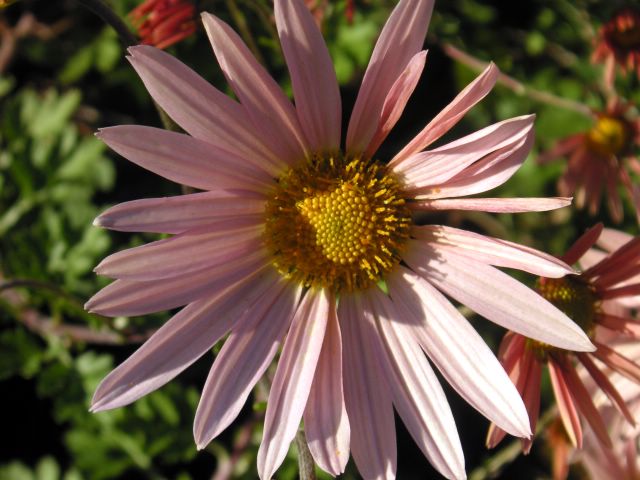
This is one of my favorite mums, because it looks so unmumlike (the way I look?) They were covered with pollinators, still trying to produce even after killing frost and snow. Posted by Picasa

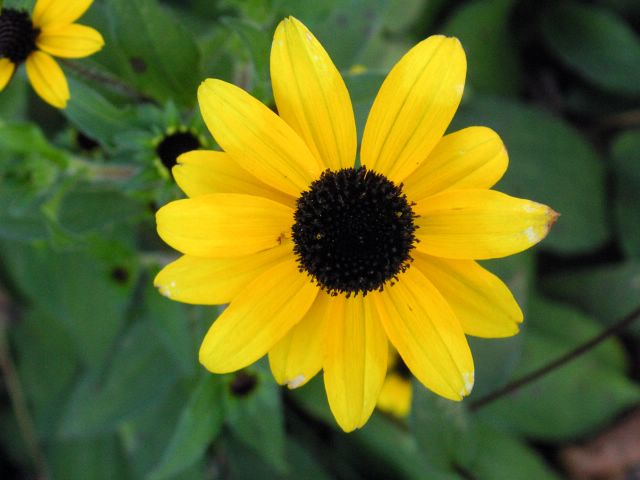
The last rudbeckia, still glowing by my garden path. Posted by Picasa

A Short Fall Garden To-Do List

There are probably a million things I could think of that need done around the yard and in our various gardens but here are a few that are bouncing around in my head at the moment. I've been distracted with the deer the last couple days and several things that need done haven't been tackled yet.

Dave's Fall Garden To-Do List

  • Build a second compost bin. I have three palettes that need screwed together to make a basic compost bin. My old one is full and I haven't cleaned out the garden yet so it's time for a second bin.
  • Clean out the vegetable garden. I'll leave the tomatoes until they finish ripening but three beds need cleared.
  • Plant the garlic. In one of the garden beds that needs cleared I'll put the garlic cloves for next year.
  • Weed the various gardens for cool season weeds. If I don't get a handle on them now they will get away from me. I shouldn't have too much trouble with the chickweed this winter since I've covered the area that was effected but other weeds are bound to pop up in it's place.
  • Collect seeds from anything that has deadheads. The zinnias, cosmos, rudbeckias and coneflowers should have plenty of seed for collecting by now.
  • Finish laying rock near the patio. Between the patio and the house is a small rock area that needs finished. Once that part is done I can call the patio construction complete for this year!
  • Pot up more cuttings. I have some spirea cuttings that need potted as well as some salvia.
  • Clean out the garage. The garage is in complete disarray at the moment, as a result of a busy gardening season. Once I clean it out I can move some tender plants inside and put the cuttings in the garage greenhouse.

There's just a few things that need done among many others that will pop up as I go. Every item on the to-do list seems to have several other chores attached to it. What chores need done in your garden?


Garden Questions of the Month: September 2008

I'm a little late on this post but here it is! What questions did people ask in September? Here's a glimpse of what information some people were looking for and wound up here!


How fast does Russian sage grow?

Pretty fast! I put in two plants this spring from cuttings and they grew to full size and bloomed. They had ideal conditions since they were planted in full sun. With the right conditions a fall planted Russian sage should reach a full size of 3-4 feet the following summer.


How far apart can I plant my Bradford pear trees?


How about miles, and miles away from me! Sure Bradford pear trees are pretty in the spring but they have been planted everywhere. Find a nicer alternative that's not invasive and doesn't fall apart in minor winds; like my answer to a later question in this post! But if you insist on planting them, space them out so that they have room to spread 20-35 feet. You can plant them a little closer if you want them to grow together. I would plant them about 20 feet apart. Of course this assumes that they make it to maturity without cracking or breaking in a storm!

What is eating our butterfly bush?

You got me there! It could be lots of things but even the deer have avoided our butterfly bushes. Butterfly bushes don't have many common enemies. I would recommend taking a picture to your local agricultural center and see if they can identify the damage.

I'm redoing my landscape, what are some good inexpensive plants to use?

I'm always looking for cheap plants so you've come to the right place! The strategy I use is to purchase perennials. Perennials generally come back each year, unless weather conditions dictate otherwise, so once you've bought it you probably won't need to replace it any time soon. The same goes with shrubs and trees. Let's compare annuals and perennials for a second. A 6 pack of annuals might cost somewhere around two dollars and will last for one season. A perennial may cost around 6-7 dollars on up to 10 dollars and will come back each year. In only a couple years you recoup the cost of your perennials. Also consider buying small perennials and letting them grow into the landscape. Perennials don't take long to reach significant size! If you buy them on the discount rack at the end of the season you save quite a lot more. If you're looking for specific plants you can't go wrong with daylilies. There is a variety of colors out there to use and they can be divided into more plants each year easily.


What ornamental tree can I plant in front of my house?

There are lots of options but my favorite is the Yoshino Cherry. It blooms with white flowers in the spring and still has nice foliage through out the rest of the growing season. It also can provide good shade in only a couple years as it is a relatively fast growing tree.

Can a purple leaf plum be planted in the fall?

Yep.


OK I'll elaborate! Fall is the best time to plant deciduous shrubs, trees, and perennials. It gives the plants time to grow good root systems over the winter and when spring comes they are ready to flush out with new growth. Fall is the time to plant!