.

Showing posts with label perennials. Show all posts

Easy to grow, Low Maintenance Plants for the Garden

Over Christmas we traveled a little.  Not much, we never go very far.  We just visited with family.  One evening a family member asked me if I knew of some attractive, easy to grow, low maintenance plants she could put in the front of her house.  She wanted something she could plant that wouldn't require a whole lot of time to maintain since she has a young baby and a busy work schedule.  Low-maintenance plantings shouldn't need much pruning, supplemental watering, and should continue to re-bloom without deadheading if at all possible.  Essentially low maintenance plants should thrive on neglect! The list of plants below includes the three I suggested as well as several others that several gardeners on Facebook suggested!


Easy to grow, Low-Maintenance Plant Suggestions for Home Gardeners


  • 'Homestead Purple' Verbena
    Verbena - annual or perennial verbena forms either a nice mound or a sprawling groundcover.  'Homestead Purple' verbena is a perennial favorite perennial here in our garden.  It comes back each year if it is planted in a location that is well drained.  A butterfly favorite!
  • Lantana - lantana looks great in pots or planted in the ground.  
  • Zinnia - zinnias come in all shapes and sizes from small little button ones to tall dahlia like flowers. They are an annual but can reseed and bring back blooms each year.
  • Marigold - Marigolds are often maligned as too common but for sheer impact they can be impressive!  Try looking for heirloom varieties for something a little different. Marigolds grow very easily from seed which you can collect at the end of the season and replant next year.  Marigolds are planted in companion planting designs with tomatoes to repel root nematodes.
  • Portulaca - a succulent bloomer that serves well as a groundcover
  • Sweet Potato Vine - Sweet potato vines are an excellent groundcover that really takes care of itself.  I like to put a lime green colored potato vine with a purple colored one.  Sweet potato vines root easily from cuttings which allows you to fill up large areas very quickly.  Pin down a vine to encourage rooting along the stem to spread the vine where you want it to grow.  Sadly it's only an annual here in Tennessee.
    Purple Sweet Potato Vine with Moonflowers
  • Nigella - also known as Love-In-A-Mist is a flowering annual easily grown from seed.
  • Annual Vinca - make sure if you plant vinca that you only choose the annual kind!  Perennial vinca is extrenmely invasive.
  • Heuchera - I'm a big fan of heucheras and try to adda few more each year.  Plant breeders are coming out with more varieties than I have places to put them!  Typically heucheras enjoy dry, well drained, and shady locations but newer more sun tolerant heucheras like 'Southern Comfort' are on the market.  They need divided every few years but generally are extremely low maintenance.
  • Monarda - Bee balm is a great plant for attracting bees and butterflies as you would expect based on its name.  Shorter varieties are available.  They can suffer from powdery mildew so make sure to water at the base of the plant and not the leaves.  'Jacob Kline' is one of the more mildew resistant varieties.
  • Sedums - sedums are another succulent that really does well when neglected. 
  • Rudbeckia - Black-eyed Susans are extremely attractive flowers that are very low-maintenance.  They can have a tendency to spread if allowed to go to seed but can be weeded out each spring.  Rudbeckia is a good plant for pollinators.

I hope these suggestions help you when planning your garden. This is a short list of many possible options and if you have other suggestions to offer please comment!  Please remember that your experience may differ from other gardeners due to soil conditions, weather, and other climate factors and the plants listed above may or may not grow as well in your garden as they might in mine.  

Autumn Scenes from Cheekwood Botanical Gardens

Yesterday I traveled up to the Cheekwood Botanical Gardens to listen to Tina from In the Garden. She was doing a talk on Winter Gardening and all that it entails so we thought it would be a great opportunity for us to visit with her and check out the gardens while we were there. We also visited with Gail from Clay and Limestone at the meeting too. It's always fun to visit with other garden bloggers!

Cheekwood Botanical Garden has to be counted as one of Middle Tennessee's finest treasures. Their programs are always dynamic and interesting like the Chuhuly exhibit last year or the treehouses this year. Unfortunately the light was beginning to fade when we arrived at 5:30 PM and my pictures will be somewhat less than what they could have been with the right lighting but I think you'll be able to see some of awesome job that the Cheekwood crew does.

From where I entered the garden I saw this display.  While still pumping out the blooms some of the flowers had fallen.

Just beyond that display was this group of mums planted enmass.  They used a combination of cannas and Salvia leucantha as a backdrop.


 On the opposite side of the walkway the mums were backed by 'Black Pearl' ornamental peppers.


And further down the coleus served as the backdrop.


Down the sidewalk was this covered walkway area.  Mums lined the pathway on both sides with plantings of elephant ears accenting the shady areas. There were various scarecrows around the gardens on display.  The one to the left was Mama Lama.


At the end of this garden was this tall planter back with arborvitae and ornamental grasses...and of course - more mums!


Cheekwood had treehouses on display this year which have since be moved except for this one.  If I remember correctly it was the Walden Tree House.  I would love this in our backyard - maybe even more than my kids would!


I'll share some more pictures from Cheekwood later this week including some shots of their Japanese Garden and a couple water features!


Feels Like a Fall Morning

This morning's cool temperatures made it feel like my favorite season is well on its way.  Of course autumn is coming but the extra cool August temperatures we're having have me hoping for an extended fall season.  Here's a look at a few things from around the garden this morning!

'Arizona Sun' Gaillardia - Blanket Flower is a good native plant to have around.  It works well as a border plant at the front of gardens that tend to be relatively dry.  I've grown 'Oranges and Lemons' before but lost the last one to aster yellows disease.  I've removed every plant I've seen that shows the aster yellows signs so hopefully we're in the clear.


'Primal Scream' daylily - I was surprised a couple weeks ago when I saw another scape growing from this daylily!  I don't think 'Primal Scream' is normally a rebloomer, but maybe I hit the jackpot.  The blooms are about 8 inches in diameter.


Purple Smoke Tree 'Grace' - I'm really excited to see my purple smoke tree (Cotinus coggygria x obovatus 'Grace') bloom this year.  Every year it has been nibbled on by deer until this year.  I'm not sure how it avoided the deer but I'm glad it has. Hopefully it will start to grow taller now!  It's been in the ground for 3 years and is still around 3 feet tall.


It looks stunning in the morning dew!


Have you planted a purple smoke tree?

Three Perennial Plants Never Touched By Deer

Never say never right?  In my experience there are very few plants that are truly safe from deer.  This year I've had big time deer issues.  The extra tomato bed I planted was completely devoured by the two deer that are camping out in our backyard.  That isn't shocking really.  I wasn't able to put a good fence around any of and I'm paying the price for that lack of foresight.  However not all plants are subject to deer sampling.  There are three plants in my garden that have never (to my knowledge) been eaten by the deer.

Artemisia
Artemisia is a beautiful silver colored plant that has a lot of impact due to the foliage.  I recommend planting 'Powis Castle' or 'Silver Mound' over some of the other types as they can spread.  Both 'Powis Castle' and 'Silver Mound' are easy to keep under control.  They like full sun and good drainage and aren't very picky plants at all!


Russian Sage
Russian sage (Perovskia artiplicifolia) is a great plant for full sunny locations.  The purple flowers are highly attractive to pollinators.  The leaves give of a strong scent which is probably why the deer do not partake of it.


Catmint
Catmint and its cousin catnip are both pretty much deer proof in my garden.  Catmint doesn't attract the kitties like catnip and has a very nice minty scent when cut or brushed against.  It grows prolifically and is covered in blue flowers through the summer that are very attractive to bees and small butterflies.


Do you have deer issues?  What plants have you found that are deer proof?

Blackberry Lily (Belamcanda chinensis)

A couple years ago I was given a blackberry lily (Belamcanda chinensis) to add to my garden.  I planted it when it was covered with seeds and let it go to grow as it could as I do with so many plants. I forgot about it but apparently several seeds landed in different location near our front porch entry area and surprised us with its flowers this year.

Blackberry Lily with 'Powis Castle' artemisia and potato vines

Blackberry lily is a member of the iris family and resembles irises with its foliage.  The color and texture of the leaves is very similar but the formation of the leaves differs. 


The flowers are about 1 and a half inches in diameter and are colored bright orange with specks of darker orange to red colors.  The flowers eventually produce a seed that resembles a blackberry hence the name.  It readily grows from seed and it is extremely easy to cultivate!

5 Heucheras and How They Perform

Over the years I've accumulated quite a few heucheras for my garden.  Heucheras or coral bells are becoming more and more popular as a wide array of unique cultivars continue to come on the market.  You might even think that heucheras are relatively new to the horticultural world when in fact they've been tinkered with by horticulturalists since the late 1800's.  Heucheras are native to North America and can be found naturally from the west coast to the east coast.  Heucheras thrive in rock gardens and in dry shade where other plants might not be so happy.  Heuchera breeders are working on developing more sun tolerant heucheras as well as heucheras with larger flowers. As a general note I'm fascinated with them.  Foliage colors range from green to amber to brown to purple while the bell shaped flowers general stay between a mid range pink to white in color.

Today for my Friday Five post I'll share with you a few of my heucheras and tell you how they've performed in the growing conditions here in Tennessee.  The pictures were all taken in a previous year as the drought and heat have really taken a toll on everything in my garden.  Even drought tolerant heucheras are not immune to 110 degree heat!  But the fact that they are drought tolerant will likely get them through the worst of it.

Here are 5 Heucheras that I've grown in my garden and how they have performed! 


Heuchera - Dale's Strain
'Dale's Strain' has been a great performer in my garden.  It's planted in nearly full shade underneath the foliage of a 'Shasta' Viburnum and a birch.  'Dale's Strain' has green foliage with frosted white on the leaves.  This heuchera has been widely used in hybridization of other heucheras.

Heuchera 'Midnight Rose'
This beautiful heuchera has dark purple foliage that is almost black with spots of a lighter purple that resemble stars in the night sky.  It's been located in my corner shade garden which houses a number of heucheras as well as hostas.  The intense heat and sunlight have actually cause some mutations in the coloring which have given some leaves a mottled or marbled look with some cream tones.  'Midnight Rose' is a sport mutation from another heuchera called 'Obsidian'.  It's a beautiful heuchera but needs shade to maintain its appearance.

Heuchera 'Silver Scrolls'
I fell for this heuchera the second I read about it.  I found it locally, planted it, then it died by the end of the year!  If I remember correctly it's death coincided with the floods of 2009.  Heucheras aren't fans of too much water.  'Silver Scrolls' has silver colored leaves that would have made a nice contrast with my 'Midnight Rose' had it survived!

Heuchera 'Palace Purple'
'Palace Purple' is perhaps one of the easiest to find heucheras around.  It's a good solid heuchera for any beginning heucherafile!  It comes true from seed which is one reason why it is so easily found in garden centers. That shouldn't diminish its value though. 'Palace Purple' has purple foliage with a pinkish colored underside.  It looks great when planted with light greens or chartreuse plants.  'Palace Purple' has performed great in several locations in my garden include some fairly sunny spots. 

Heuchera 'Mystic Angel'
'Mystic Angel' is another really neat heuchera that has grown nicely in my garden.  It's in full shade underneath a crape myrtle and hasn't has a single issue.  It transplanted well last year and hopefully will again this fall since it needs to be a in a location where it can be seen.  It was a victim of the "I want this plant now even though I have no clue where to plant it" syndrome.


Heucheras are a very good alternative to hostas if you live in a deer or rabbit populated area.  They are extremely resistant to foraging.  Nothing is completely deer proof and I have had the flowers nibbled on by the deer, but that sure beats the whole plant becoming a salad bar! For more information on Heucheras I recommend Heucheras and Heucherellas: Coral Bells and Foamy Bells from Dan Heims and Grahame Ware.  Dan Heims is an expert on the hybridization of many types of plants with heucheras and founder of Terra Nova nursery a premier plant producer!  Or you could look into Heuchera, Tiarella and Heucherella: A Gardener's Guideby Charles and Martha Oliver.  Their Primrose Path nursery has produced quite a few well known heucheras that gardeners enjoy.  (Both of those links take you to Amazon.com)

Since this is a Friday Five post I only included 5 heucheras but if you would like some other selections that are more sun tolerant try 'Southern Comfort', 'Amethyst Mist', or 'Kassandra'.  I was given an 'Amethyst Mist' by a friend of mine who has it planted in her full afternoon sun front yard but I haven't tested that just yet.  Southern Comfort does pretty good in the sun but has suffered in the heat and drought this year.  'Kassandra' is very similar in appearance to 'Southern Comfort' and seems to perform just as well!

A Short Plant Propagation Update

I wish I could say I had thousands of plants sitting in the backyard from my plant propagation experiments but unfortunately I've just been too busy to do much this year. That isn't to say I'm not happy with what I've accomplished. Sometimes the uniqueness of the experience is much more valuable and satisfying than quantity produced.  What I'm especially pleased with are the rooted cuttings I potted up today. I've been keeping several cuttings in my propagation box that were probably ready to come out days if not weeks ago.

My propagation container sure looks like a mess doesn't it? It's a hodge podge of various perennials and shrubs. Ideally I would divide each container by type and variety but when space is an issue - or time for that matter - shoving them all in the same spot will just have to do! Inside this former salad container are cuttings from perennials like gaillardia, 'Purple Homestead' verbena, and Russian sage. I also have some pineapple sage which is an annual I like to have in my garden.

The shrub area is where I'm excited. Three more of my chamaecyparis cuttings rooted which brings me up to six successful chamaecyparis cuttings.   Also in the below picture are a viburnum, hydrangea, and a teeny tiny little butterfly bush.  Unfortunately the camellia cuttings have yet to root and I lost my single crape myrtle cutting. Sometimes everything works and sometimes you lose a few.


I potted the shrubs and planted the perennials directly into the garden since the weather has forecast good chances of rain throughout the week. In fact it even rained about 0.2 inches today.  I desparately need to get outside to trim back the suckers on our crape myrtles and I'll probably make a few cuttings while I'm at it.

What's on your propagation to do list?

Drought Tolerant Plants and Photos Around the Gardens

I hope when you read this post that the rains are coming down in a delightful shower to water your garden, because they certainly aren't here! It's dry, extremely dry. Working in the ground is like cutting through a brick. Fortunately we've planted plants over the years that can tolerate these dry drought conditions.

Autumn sage is one of those drought tolerant sages that is a reliable performer.  It hasn't stopped blooming yet this year which is different from most years.   Usually it blooms in the spring then stops during the summer then picks up blooming strong in the fall.  It can be easily propagated through cuttings and also through seed.  I just gathered seed for it the other day that I'll plant next spring.


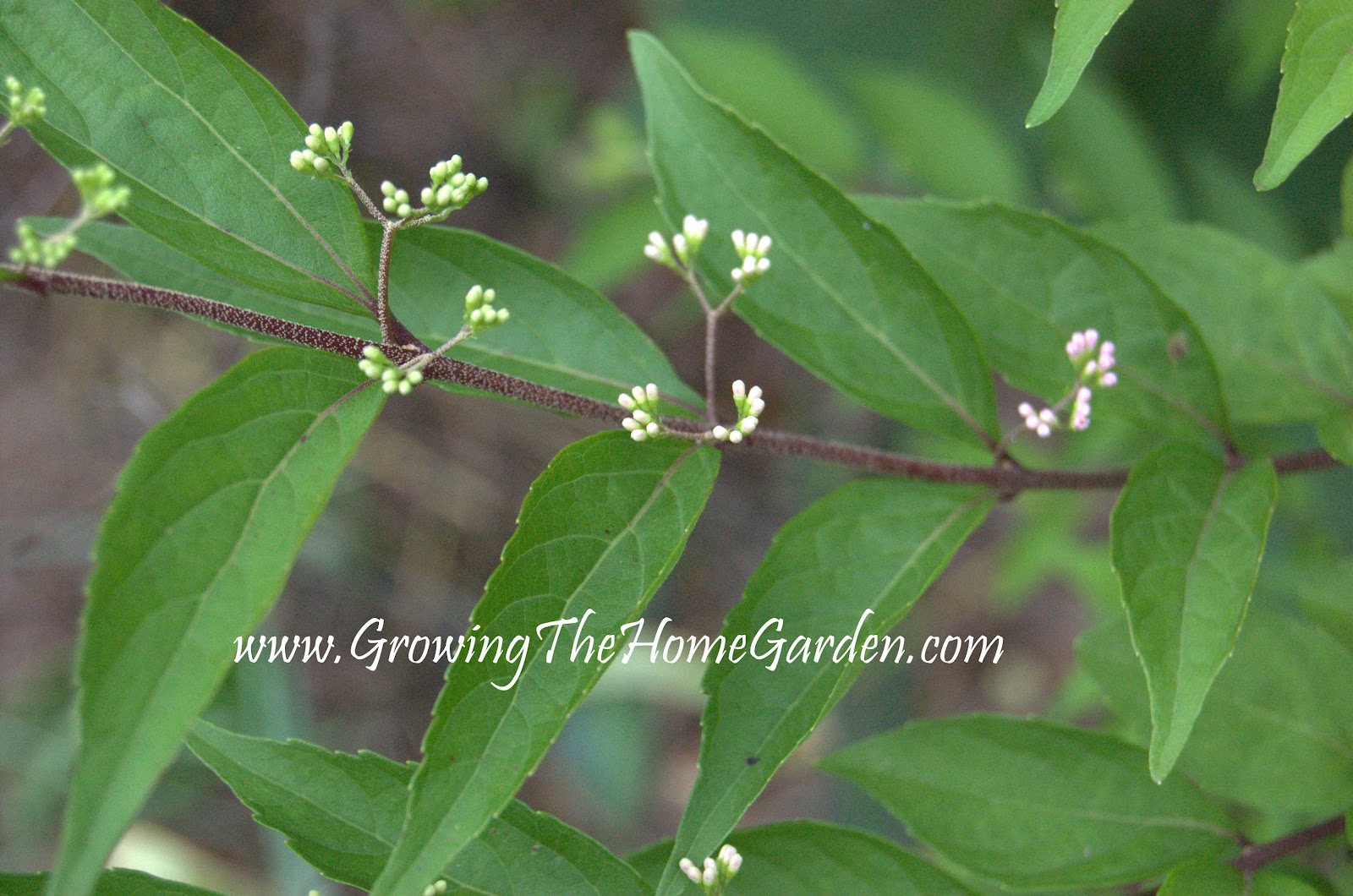
Even though this isn't the native beautyberry (Callicarpa americana) this Callicarpa dichotoma does quite well in our dry periods.  It's beauty is spectacular in the fall when bunches of purple berries cover the branches. Beautyberry is very easy to grow from cuttings.


Black and Blue salvia is another tried and true drought tolerant plant.  It never fails to perform well. It also is very good at feeding the hummingbirds!


Monarda isn't always thought of as being drought tolerant but ours seems to do well under a small amount of shade.  Locating it in a good spot is also important as both of the plants in the following pictures are sited where the soil is more rich than other areas of our yard.


Daylilies seem to do great even when the weather isn't ideal.  I've been extremely pleased with the performance of 'Primal Scream'.  This orange beauty is a definite eye catcher!


Rudbeckia is always a nice choice for drought tolerant gardens.


Here is a Tennessee coneflower - or perhaps a hybrid.  I'm not entirely sure as it came to me from a plant swap.  Whether the echinacea in the picture is a Tennessee coneflower or not the Tennessee coneflower itself is very drought tolerant and thrives in the less than ideal soils of cedar glades.


One of my favorite over perennials period is the heuchera!  Here is one little tiny flower from a heuchera called 'Paris'.  'Paris' sends up clusters of beautiful coral red flowers.  I've found that all the heucheras in my garden have done very well when water is scarce!


What plants are the best performers in drought conditions for your garden?

Blooming Daylilies

Daylilies are one of those plants every garden should have. Unfortunately I've been lax in adding daylilies to the garden over the years. I'm not sure why really. It might be the fact that daylilies in the garden centers aren't all that thrilling and that is where I do most of my shopping. I've perused catalogs for various online nurseries and seen some spectacular daylilies. I tend to be hesitant to order much through online nurseries since the plant size tends to be fairly small.

I bought a new daylily this year called 'Primal Scream' which won't be featured in this post (You can see 'Primal Scream' here). It's a few days from its first blooms but sports brilliant orange blooms when it does. Or at least it's supposed to, I haven't seen it yet! Here's what our current daylily collection looks like:

Stella D'Oro Daylily
Stella may be common but when used in the right places can really add some color. I can't say for 100% certainty that his is a Stella since it came with the house but the odds are good.


'Red Volunteer' Daylily
This beautiful daylily was just given to use last weekend by a friend who lives on the other side of our neighborhood. It has a nice form and a beautiful color don't you think?


Forgotten Name Daylily (edit: 'Pardon Me')
I'm guilty of completely forgetting the name of the daylily that Frances gave us a couple years ago.  I always try to keep up with all the names and cultivars but sometimes my memory fails! It's done very well in our garden and has been divided and moved into a couple locations now.


'Crimson Pirate' Daylily
Arrrr!!! Need I say more? Probably. 'Crimson Pirate' came from a box bought at a box store. The petal shape is quite different from the other daylilies we have. It's more of a spider type daylily.


Ye Old Ditch Lily
We have quite a few ditch lilies around the garden. It's taken some time but I've realized that the proper place for these in the garden isn't among the other plantings. Ditch lilies should be planted enmass for a full effect as filler plants in their own special area.


Do you collect daylilies? How many varieties do you have?