.

Showing posts with label name that plant. Show all posts

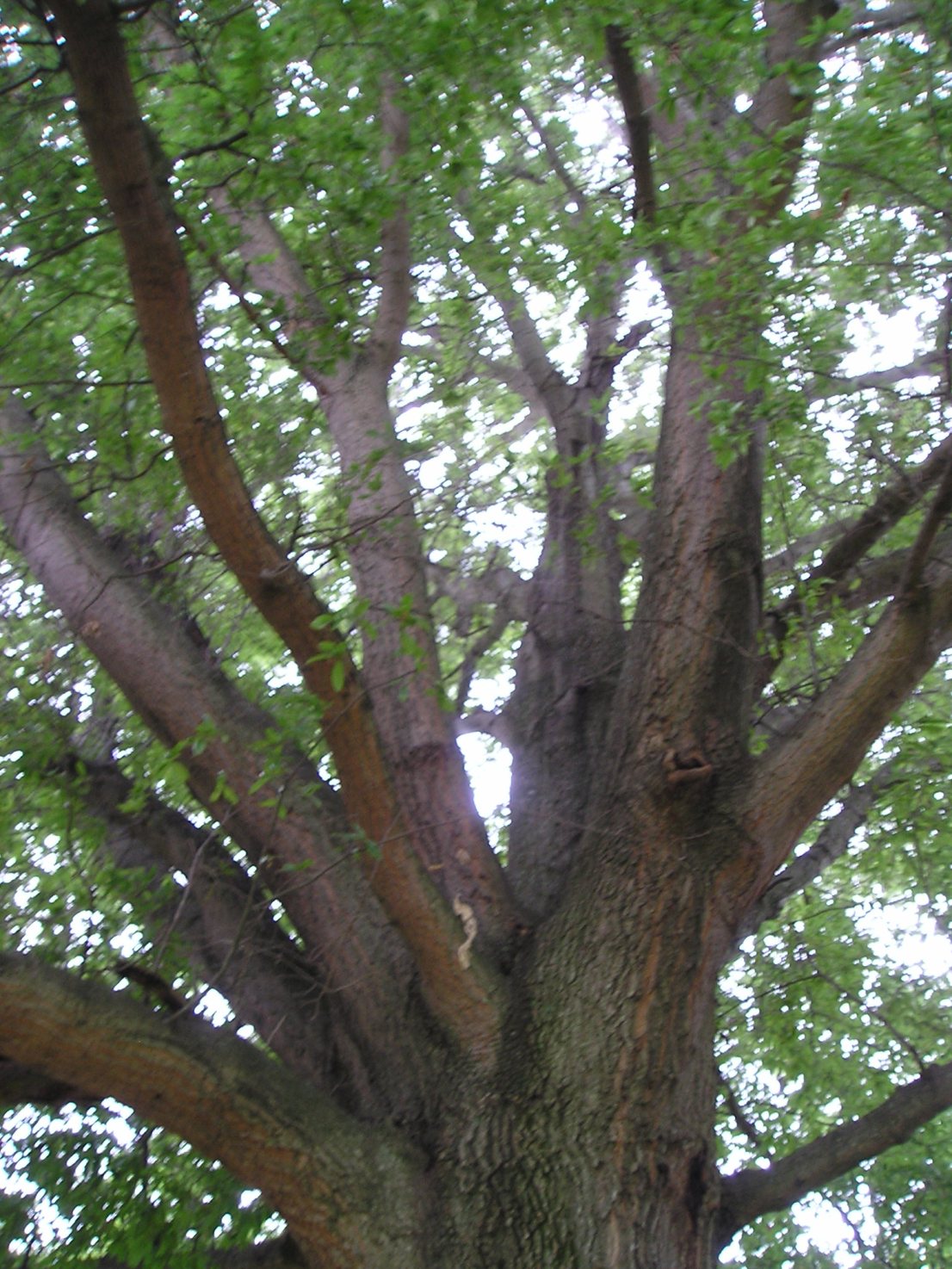
Plant of the Week:Oak

The plant of the week this past week was an oak tree. This tree is actually in West Tennessee at my wife's grandmother's house. It is a very large and majestic tree that provides great shade and a bounty of acorns each year. The picture was taken from the base of the tree looking up at the canopy. As for the exact type of oak I suspect it is one of two possible candidates: the willow oak or the shingle oak.

The willow oak and shingle oak can be sometimes be confused due to the similar nature of their leaves. Each leaf is narrow and oval shaped as opposed to the ridged and pointed leaves of other oaks. The leaves of the shingle oak (Quercus imbricaria) tend to be longer than the willow oak (Quercus phellos).

For more information and a quick identification guide follow this link (pdf file):
The University of Tennessee Extension: Identifying Oak Trees Native to Tennessee

Name that Plant!

It's been a looong time since I've posted a new Name that Plant. This one was contributed by Lola a frequent visitor here who was wondering what this plant is in her yard. I have a suspicion of what it might be but I can't say for 100% what it is. See if you can help us out! Lola's garden is down in Florida which may aid you in identifying this mystery plant.


What do you think the mystery plant is?

Tennessee Wildflowers Blooming: Sulphur Cinquefoil

Thank you for all those who took a stab at the latest Name that Plant. Several of you knew exactly what it was, sulphur cinquefoil or botanically known as Potentilla recta. This wildflower member of the Rosaceae family grows between 16 and 32 inches long with palmate leaves that have 5-7 leaflets on the lower parts of the plant and only 3 toward the top. Its flowers have five petals which is where it gets its name. In Tennessee it can be found from the Western Highland Rim and eastward as well as Carroll and Shelby Counties (Memphis).

Much of the information in this post comes from Jack B. Carman's book Wildflowers of Tennessee. It is definitely worth getting if you are a wildflower enthusiast.

Name That Plant!


Is this a wildflower or a weed? Of course the phrase "beauty is in the eye of the beholder" always applies to wildflowers. What one person appreciates another might find invasive and vise versa. Then again someone might appreciate it and find it invasive...what do you think? This wildflower is very common in the southeast and much of the United States. I can assure you it is very common in the wilder parts of out yard! I think the pale creamy yellow flowers are very attractive, but in the landscape these plants might take over.

Here are some more pictures that might help you figure it out.


The stem with its leaves.


Could this be a clue? Five serrated leaves.


Mystery Plant or Mystery Weed, Which Is It?

Maybe you can help us figure something out. Jaime sent me this picture of a plant growing where she wanted to plant zinnias. If the plant growing there is something good then she'd like to see it grow to flower but if it's a weed well, you know what she'll do to that weed! I've checked out several weed pictures and can't seem to match one up with the plant in her picture so I figured that someone reading this blog might have a good guess that will help Jaime out.  Here's the picture of the mystery plant:


What do you think? What plant is this mystery plant?

Name that Plant: Blueberry Bush

It's about time I positively identify the Name that Plant. It was a 'Duke' Blueberry bush. Our eldest daughter loves blueberries and while I'll eat them occasionally they were planted for her. I planted two this spring and while we are hopeful that this Northern Highbush blueberry will bear fruit we may have to be patient and expect it next year. From what I have read on the Duke variety of blueberry (vaccinium) it is nearly guaranteed to grow well in zones 4-7. Blueberries are one of those power foods that are high in antioxidants, good stuff for fighting off free radicals.


We typically eat our blueberries plain but there are many ways to eat them. Blueberries go well in muffins, pies, and there is even a blue berry soda! Go check out the recipe by Alton Brown if you don't believe me!


So who got this one right? Only two got it right from the beginning: Lola and Tina. Skeeter and Nancy both found a hint and get second prize!

Here are the current scores:

Tina (In The Garden): 2
Lola: 1
Jen (Jen-O-Topia): 1
Nancy (Soliloquy): 1.5
Chey (A Maritime Gardener):1
Melanie (Old Country Garden): 1
Skeeter: 1
Jillybean (Post-it-Place): .5

Name that Plant!

I know what this plant is, do you? See if you can guess it!


The young foliage.


The flowers.


A stem covered with bugs!
(Crane flies, harmless but they are everywhere right now)

Name That Plant!


Who is this peaking up from the mulch in my garden? Give me your best guess! You may have some of these coming up in your garden too. I'll show pictures as it grows for you to find out if your guess is correct.


Here is the update. I bet you can guess it now. The variegated green leaves are pushing up. What do you think it might be?

Name That Plant: Hosta

There's no denying it . The most recent Name that Plant was indeed a hosta. This one is a 'Patriot' hosta I picked up at the end of the season last year. It was named the Hosta of the Year in 1997. It has some really cool variegated green foliage and little purple flowers that rise up on stalks later in the summer. It may have flowers but most people grow it for the foliage. Soon this little hosta will be joined by caladiums, huecheras, huecherellas and coleus in our shady corner garden.

They like morning sun, afternoon shade, well drained soil and long walks in the garden (you have to do the walking since they pretty much just sit there). Beware of slugs since they like hostas as much as people do...or maybe more.


Keeping Score:
Tina (In The Garden): 1
Jen (Jen-O-Topia): 1
Nancy (Soliloquy): 1
Chey (A Maritime Gardener):1
Melanie (Old Country Garden): 1
Skeeter: .5
Jillybean (Post-it-Place): .5

I thought it might be fun to add a competitive element to the Name that Plant Posts. If you get it right on the first guess you get a point, if you change your answer and get it right before I post the follow up you get half a point. What do you think?

Plant of the Week: Honeysuckle

The plant of the week this past week was correctly guessed by several people. It is a honeysuckle vine. This particular one is sprawling up the lamp post outside my parent's home. I suspect that it is a trumpet honeysuckle or coral honeysuckle (Lonicera sempervirens). It was there before they purchased the house so I can't be 100% sure of what variety it is. One thing is for sure it isn't the invasive take-over-the-world kind that exists over much of the south. This native honeysuckle tends to grow slower than the Japanese variety that has proven to be invasive since it was brought to the United State's in the 1800's to control erosion. Honeysuckle is very attractive to hummingbirds and butterflies as well as other birds who like to munch on the berries. If you choose to plant honeysuckle make sure it is a native, the Japanese variety doesn't need your help!

Plant of the Week
Other Plants of the Week

Name That Plant!


Can you identify this plant? We shot this shrub in California in June of 2005 . It was at the entrance of an airplane museum at Edward's Air Force Base.


Name that Plant!

This plant is probably easily identifiable. In fact it's a good bet that if you live in the south you have it in your yard, your neighbors yard, your school, your bank and pretty much everywhere you could think to put it! I saw rows of this at the home improvement store today which prompted me to make this post. Take a guess at it or if you know what it is then tell me what you think of it. I'll withhold my opinion on it until later!

Vitex agnus-castus


Here is the answer to the Name That Plant trivia post: Vitex agnus-castus. The chaste tree as it's also called is a native of China and India but has become naturalized in the southern United States (z6-9). Apparently it's been here since 1670! It does bear a striking resemblance to butterfly bushes and attracts pollinators just as well. For some good information on its history follow this link to the Texas Cooperative Extension at Texas A&M.

Subscribe to The Home Garden

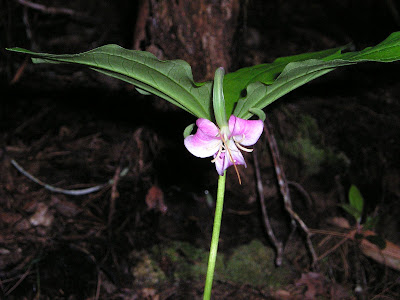
Plant of the Week: Trillium grandiflorum


This plant of the week resembling a swooping bird is known as Trillium grandiflorum! Trillium is a member of a group of plants called the ephemerals. And no, it is not some sort of new rock band, but a group of flowers that appear in late winter and go through a two month cycle. They flower, seed, and die back to dormancy within that cycle. Trillium is an under story plant that has adapted to deciduous forests. When the leaves of the trees are gone this little flower uses the available light to grow. Its flowers bloom white and gradually change to the pink color above as it fades. According to the Great Smoky Mountains National Park website there are ten varieties of trillium in the park! Take a look at the link and read about some other wildflowers in the Smokies.

This is a picture from one of our many visits into the park.