.

Showing posts with label drought tolerant plants. Show all posts

Dry, Dry, Dry

The dry season is well upon us. Here in Tennessee we haven't seen a drop of rain in two weeks and even that was only .12 inches (at least in our garden). I'm not sure how long the plants can hang on without a good dose of liquid from the sky. And despite my repeated waterings the plants are suffering. My poor 'Shasta' Viburnum has foliage that looks much more like a contorted filbert.


In times like these it's good to have a foundation of plants set that are drought tolerant. Fortunately I have a few! Here's a short list of the plants in my garden that so far have not been stressed by a month of Tennessee drought conditions. Their performance may vary depending on the quality of the soil.

My Drought Tolerant Shrubs and Trees

Caryopteris 'Longwood Blue'

There are many kinds of drought tolerant trees and shrubs available and in many cases going native is the best option.  Although you can see from my list above several plants that are doing well are not even from our area at all but are fairly adaptable to the Tennessee garden climate.

How has drought or water effected your garden this year?


Drought Tolerant Garden Plants

My gardens haven't seen any rain for several weeks now.  The grass is brown and I even commented to my daughter that it sounds like crunchy snow.  Of course the reality couldn't be further from the truth - it's hot!  No snowball could survive in our back yard today with temperatures expected to rise into the triple digits.  Droughts do provide us with one really nice opportunity to examine our gardens for drought tolerant plants.  Here are a few of those plants that have done very well in my garden without any supplemental watering.

In most cases natives perform better than exotic plants in the garden.  But there are exotics that can thrive in our weather conditions.  Unfortunately these exotics often become invasive because they can handle our native conditions so easily.  Take this butterfly bush for instance.  It's done fantastic without any care from me this year.  It's a beautiful plant but can be a fast spreading invasive in the right conditions.  As an example take my mom's garden.  She has two butterfly bushes outside her vegetable garden and last year they seeded the vegetable garden with at least 20 new butterfly bushes.  They are drought tolerant but beware before planting!


One really cool native plant is ninebark.  This physocarpus is 'Diablo', a patented variety with gorgeous purple tinted leaves.  It's performed very well through the drought so far.

These pictures were all taken in the heat of the day and so the leaves have curled just slightly as a defense against losing moisture.  This is perfectly normal for most plants.  It's when plants start the day off wilty that you need to be worried!


I can't say enough good things about switchgrass!  Native, hardy, beautiful, and a great replacement for miscanthus.  I have 5 varieties in my garden and I like them all!  Here is 'Heavy metal' and below it you will see 'Shenandoah'.  All switchgrasses can be propagated easily through division


 'Shenandoah' features reddish tinted foliage that really becomes bright and colorful in the fall. 
 

'Powis Castle' is a non invasive variety of artemisia.  It spreads only by layering which is easily controlled.  In fact it is so easily controlled that in most cases you will probably plant the layered divisions in other areas of your garden.  There are few plants that I will say are completely deer and rabbit resistant and this is one of them!  They've never taken a nibble of our artemisia. It's also extremely drought tolerant!


Achillea is one of those plants that anyone can grow!  It does spread but it's usually controllable.  Bees and pollinators love it and with the ferny foliage you will too.  Trim it back after the flowers have faded to encourage it to bloom again and again.


Native viburnums like this arrowwood viburnum do great in times of drought too.  Soon the berries will turn blue and supply the birds with some important sustenance for the dry summer.


Another native shrub that does great is the witch hazel.  Ours has never been very fragrant when blooming in the spring but does an excellent job as a small shrub in the landscape.


I hope that the weather is being kinder to you than it is to us!

To plant more natives in your garden do some research into Alan Armitage's Native Plants Book. It's a great resource! 

Drought Tolerant Plants and Photos Around the Gardens

I hope when you read this post that the rains are coming down in a delightful shower to water your garden, because they certainly aren't here! It's dry, extremely dry. Working in the ground is like cutting through a brick. Fortunately we've planted plants over the years that can tolerate these dry drought conditions.

Autumn sage is one of those drought tolerant sages that is a reliable performer.  It hasn't stopped blooming yet this year which is different from most years.   Usually it blooms in the spring then stops during the summer then picks up blooming strong in the fall.  It can be easily propagated through cuttings and also through seed.  I just gathered seed for it the other day that I'll plant next spring.


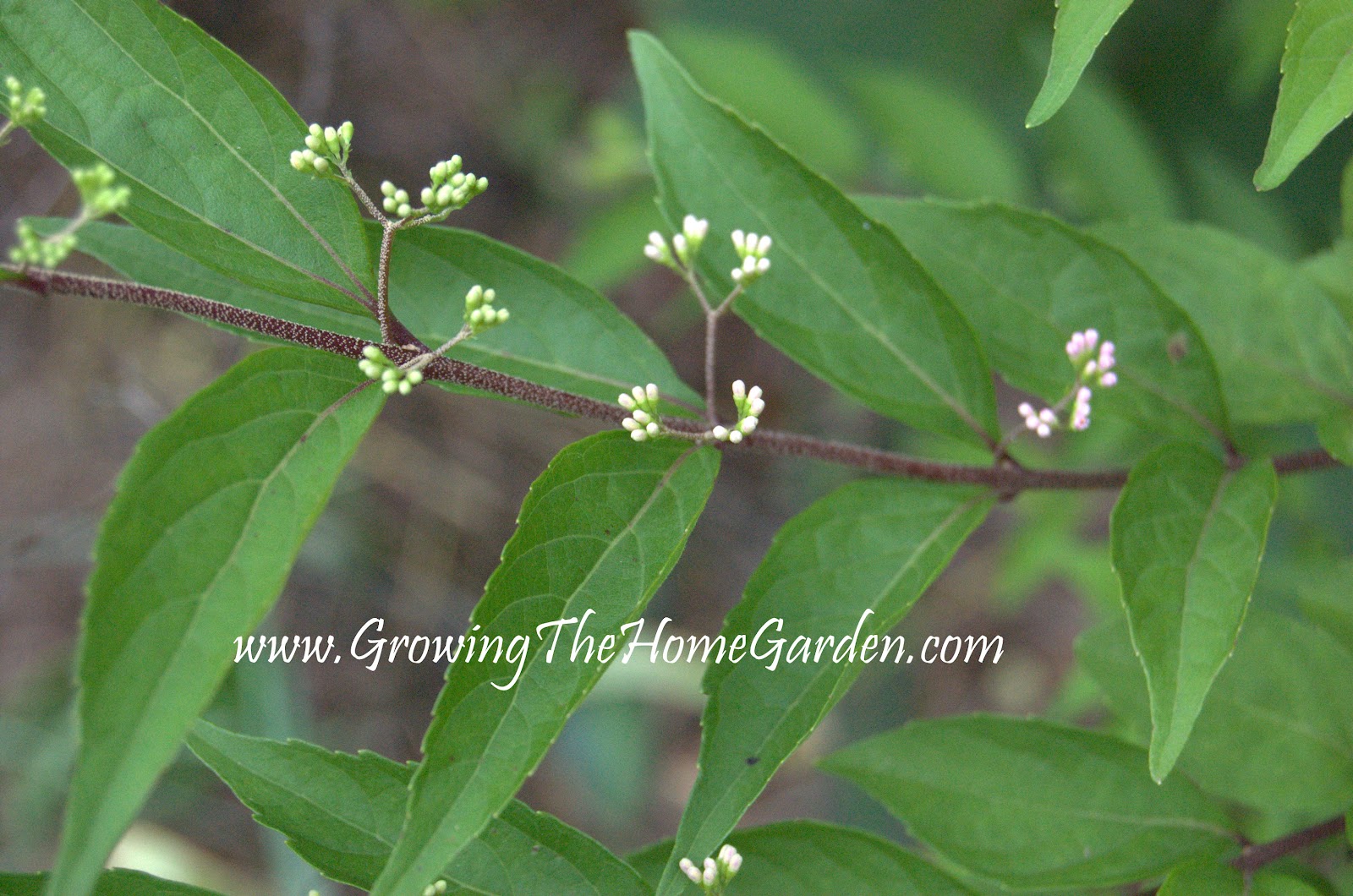
Even though this isn't the native beautyberry (Callicarpa americana) this Callicarpa dichotoma does quite well in our dry periods.  It's beauty is spectacular in the fall when bunches of purple berries cover the branches. Beautyberry is very easy to grow from cuttings.


Black and Blue salvia is another tried and true drought tolerant plant.  It never fails to perform well. It also is very good at feeding the hummingbirds!


Monarda isn't always thought of as being drought tolerant but ours seems to do well under a small amount of shade.  Locating it in a good spot is also important as both of the plants in the following pictures are sited where the soil is more rich than other areas of our yard.


Daylilies seem to do great even when the weather isn't ideal.  I've been extremely pleased with the performance of 'Primal Scream'.  This orange beauty is a definite eye catcher!


Rudbeckia is always a nice choice for drought tolerant gardens.


Here is a Tennessee coneflower - or perhaps a hybrid.  I'm not entirely sure as it came to me from a plant swap.  Whether the echinacea in the picture is a Tennessee coneflower or not the Tennessee coneflower itself is very drought tolerant and thrives in the less than ideal soils of cedar glades.


One of my favorite over perennials period is the heuchera!  Here is one little tiny flower from a heuchera called 'Paris'.  'Paris' sends up clusters of beautiful coral red flowers.  I've found that all the heucheras in my garden have done very well when water is scarce!


What plants are the best performers in drought conditions for your garden?

5 Ways to Help the Garden Survive Droughts

Drought tolerant Purple Coneflower
It's June and already we're suffering drought conditions. The weather around us is more like late July and August than June with temperatures ten degrees higher than normal and no rain. We are dry as a bone. Last night I watched as a huge rain cloud dissipated into nothing before it made it to our garden on the weather radar. My garden is suffering but here are some ideas I'm trying to deal with the drought.

  1. Plant native plants - You've probably heard this one before but native plants are better adapted to the local area weather conditions and are better prepared for the extreme weather conditions that may emerge.
  2. Survival of the fittest! Observe what plants thrive during extreme drought conditions and plant more of these kinds of plants in your garden while resisting the urge to plant more of the drought sensitive plants.
  3. Prioritize plantings and irrigate - You may not be able to water everything so select the drought sensitive plants from your garden and make sure you irrigate them on a regular basis. My priority is the vegetable garden right now which I've set up with a series of soaker hoses to bring moisture to the base of each plant.
  4. Mulch and compost, compost and mulch. - Mulch is a cure all for so many things. Mulching the garden keeps the soil moisture from evaporating too quickly and allows the plants to have more time to absorb water. Adding compost to the soil improves soil structure and thus water retention.
  5. Weed Weeds! Weeds take valuable moisture from your garden plants. They are aggressive and in most cases will out grow most perennials and annuals you choose to plant. By routine weeding you eliminate these water hogs and preserve more moisture in the soil for the plants you like!
Number 2 is something I'm keeping a close eye on this year. Drought is frustrating, can't be prevented, but can be tolerated!

How do you help your garden through drought conditions?

Growing Yuccas From Seed (Part 1)

This winter I gathered some seed from a yucca (Yucca filamentosa) and saved it. I'm not sure exactly why other than I thought it might be interesting to see how they grow. I do that sometimes, where I just attempt something for the sake of attempting it (I once planted lemon seeds from a store bought lemon to see if I could get lemons after ten years and several bouts of spider mites no lemons). I'm not even a big fan of yuccas but I know many others are. I like the flower spikes that pop up when in bloom but something about the blade like nature of the leaves feels a bit dangerous, especially with young children around. They are very neat to look at and remind me of desert areas not only for their appearance but also for their drought tolerance. Anyway I decided to try my hand at propagating a few through seed.

I planted a large flat of 9 packs with about 54 seeds. I figured if I ended up with too many extras I could always give them away. I planted the seeds then left them on my back deck for several weeks. I watered them once or twice (when I thought about it) but rarely paid them any mind. I was almost ready to throw in the towel on the yucca seeds when I spotted a few little leaves coming up this morning. So far the seedlings only number four but I suspect that more will be coming up soon.


growing yuccas from seed

The first picture shows the tallest yucca while the bottom picture shows 2 others that sprouted. I'm interested in seeing how fast the yuccas grow into full size flowering plant so I'll revisit them for occasional for updates on their progress.

growing yuccas from seed

Yucca, yucca, yucca! 

Sorry I had to throw that in here somewhere!

Making A Dry Creek Bed Drainage Canal for Downspouts

What to do with this sedum garden? That's a question we asked ourselves several times. It was at one time a sedum garden but for some reason most of the sedum died over last summer. They may have been too wet, too dry, or both! The gutter from the garage roof gushes out water from at least 50% of the roof - then the summer heat dries out the whole area. It really takes one tough plant to survive those ever changing conditions. So we have to adapt and make the area more hospitable for planting. What did we come up with? A dry creek bed with a canal to channel the water away from the house and the garden.


Here's the basic idea before implementation. A set of plain gray 2"x8"x16" concrete stones form the base layer. The channel is created by retaining wall blocks set as the borders. Inside the channel Rock pebbles will add that decorative touch that disguises the gray blocks.


I started off by laying the foundation or the base layer of gray blocks. It's important to grade it so that water will flow away from the house. All the sedums in this are that were clinging to life were moved to try to save them. Consider them in intensive care - but they should pull through! Also the two large sedums ('Autumn Joy') were flanking the channel area but are now on the same side.


Then I lined up the border retaining wall stones so they overlapped the gray block stone an inch on each side. I leveled each stone as I moved away from the house by shimming it with soil and gravel.


While laying the stone I added a couple terracotta pots into the border. Eventually I can place some plants into them and soften the stone look a little. Then I filled with a nice light brown colored decorative gravel.


Here is the dry creek bed mostly complete.


Please forgive the mess of lumber in the driveway! For a little more accent I put more pots on top of the channel wall.


Here is how it looks from another angle. The two large sedums are 'Autumn Joy'. You can't see them too well but 'Blue Spruce' and 'Dragon's Blood' are mixed in the bed. They are the sedum plants in intensive care I spoke of earlier. Fortunately a little sprig of sedum is all you need to grow a happy and healthy plant - I love plant propagation! Have I said that before?


And once again here is the project from the driveway angle. All total the project cost less that $100 and on;y took 45-60 minutes to install. I need to make a few adjustments to seal up a little gap between a couple stones on the right. It also needs a back-flow preventer stone under the gutter. We don't want any water heading toward the house if there is too much water for the system to handle!


I've always liked dry creek beds since they look really neat and serve a very functional purpose. Here's another dry creek bed I made a while back. And another one!

Have you ever tried installing a dry creek bed of some kind?

Bloom N' Garden Expo 2011

Today was my day to visit the Bloom N' Garden Expo in Williamson County, TN. It's a garden show put together by the Williamson County Master Gardeners which features talented speakers and all kinds of vendors ranging from carnivorous plants and daylilies to soaps, jams, and grape juice. There's all kinds of neat stuff to see like the display gardens.

 
Why should you go to a garden show near you? Well if you like plants then one reason is probably obvious but beyond that it's a great way to get to see what nurseries and companies near you have to offer.  Think of it as a preview of what you could find if you went to visit them at their place. I enjoy walking around and looking at the plants. I don't any attention to the vendors who sell only slightly related gardening services and goods. The landscaping display booths are interesting but I'm of the mindset that if I can't do it myself I probably don't need it in the garden. I won't be hiring any landscapers any time soon. ;)

Another cool thing about these garden shows is running into people. I talked a few minutes to Barbara Wise of www.BWiseGardening.com (her blog BWiseGardening). If you ever need container planting advice she is an absolute expert on the subject. She was also selling plants from her greenhouse that she uses for her containers. The selection she has is pretty amazing!

I also spoke a few minutes with our local Middle Tennessee Herb Expert Cindy Shapton. If you haven't seen her website the Cracked Pot Gardener you should visit! She also has a blog where she posted a picture of her new chicken coop - which features a green wall planted with what else? Hens and Chicks! Three of the plants I brought home came from her booth.

Inevitably I end up bringing home plants. It would be just wrong to be in a place with that many plants and not come home with something wouldn't it?

The first plant I bought was this daylily called 'Primal Scream'. I'm not sure why it's called that, maybe it screams with color in the garden, the picture did look pretty cool. It's an orange flowering daylily.


The other three plants are in the picture below. Pineapple sage is on the right, stevia the lower left and comfrey the upper left.


  • I bought the pineapple sage because it performed really well last year in the garden. It's leaves are scented with a pineapple fragrance and the flowers are a bright red. The deer don't come anywhere near this plant!
  • The stevia is said to be a good sugar substitute. Once I figure out how to use the leaves in tea we'll give it a shot.
  • Comfrey is recommended as a good mulch and compost element. It brings the nutrients from deep in the soil through the root systems and into the leaves. The leaves are full of the nutrients that plants love which makes it awesome for composting.
As soon as I try propagating stevia I'll pass on that information to you. I suspect it will be fairly simple but you never know! What have you brought home from the plant shows this year?

Impulse Buy Time

Last week I was in one of the home improvement stores and started wandering the gardening shelves...always a dangerous thing! I looked around at all the packaged plants which in most cases are way too early to plant out and got sucked in by the displays. I ended up coming home with one Arapaha thornless blackberry plant. I love blackberry jam and of course fruit right off the vine is pretty good too.  Since I have kids I figured the thornless would be the best choice. I only bought the one since blackberries are so easy to propagate and I figured I could easily have several by the end of the season.


The problem with the plant racks this time of year is that they are all kept indoors and the plants begin sprouting in the nice warm indoor store temperatures. It's not a big deal unless the temperatures outside are freezing! Once the dormancy is broken you risk damaging the plant in a freeze outdoors so you have to keep it protected. When I picked my blackberry plant from the mass of blackberries I made sure that it wasn't growing and still had tight buds so that I could place it in the garage until the weather warms. I probably could plant it out right now in the garden but I haven't found just the right place yet. That's another problem with impulse buys - you don't always have a location planned for that new plant - but you can always find one!

As for propagation blackberries can be easily propagated through stem tips, division of the suckers, tip layering, serpentine layering, and trench layering.