.

Showing posts with label Favorite Shrubs. Show all posts

Kerria or the Japanese Rose


A favorite in my garden is a Kerria or Japanese Rose. It is a beautiful shrub that has seasonal interest. In the spring it produces lots of flowers and then does a rebloom in the fall with a few less flowers. The stems of the shrub are lime green and in the winter they just glow in the garden giving winter interest. Kerria grows to about 6 feet tall and produces suckers. I dig up and replant the suckers in other parts of my garden. The leaves are about 1 inch long and are bright green with serrated edges. The flowers are about 2 inches across. The plant can come as a double or single blossom and also is available with varigated leaves. Kerria is highly adaptable and does quite well in dappled shade. I would suggest trying this shrub out in a mixed perennial border or a shade garden for a splash of color.
The Creative Gardener

Buddleja davidii - A Great Plant for the Garden


One of my favorite plants in the garden is the Buddleja davidii or Butterfly Bush and the name says it all - it attracts the butterflies! This plant's flower spikes comes in white, light purple, dark purple, pink or yellow. I have planted assorted colors and my favorite is the white. My white buddleja self seeds itself, giving me new plants for the garden or to give to friends. I like to plant them near my herb garden. Between the butterfly bushes and the herbs, I have lots of beautiful butterflies during the growing season. Some of the herbs, such a my bronze fennel, dill and parsley become the larval food to the Swallowtail butterflies.

Buddlejas requires a hard pruning in March. You need to cut back to within 2 inches of the old wood. The leaves are a gray green color and the plant can grow to about 7-8 feet tall during the growing season. If you do not have room in your garden try some of the new dwarf varieties. Dwarf buddlejas can be grown in containers. Buddleja davidii is native to central and western China.
Often spelt Buddleia (After seventeeth-century English botanist Adam Buddle) Buddleja is now the correct form.
The Creative Gardener

Colorful Shrubs for the Fall Garden

It's that time of year when the trees have dropped their leaves. The Hostas that once added color to the garden are now just a memory. The beautiful perennial flowers that bloomed vibrantly in the garden have died to the ground for the year. Each day brings cold weather, frost and fewer sunny days. Want that color back? Here is a way to keep that color coming in the garden just a little longer. Try planting shrubs that add color to your garden for the late fall. Some of the shrubs that I have planted for great fall color are Hydrangeas, Viburnums and Sweetspires. During the summer their leaves were just plain green, but they all provided a show of beautiful flowers for the garden during the growing season. Now that the flowers are done for the year, those plain green leaves are a blaze of color in the garden. Just take a look at the color they can give your garden.

Oakleaf Hydrangea


"Blushing Bride" Hydrangea


Snowball Viburnum


Black Stem Hydrangea


"Color Fantasy" Hydrangea


If you want to keep color in the garden just a little bit longer before winter, try adding a selection of colorful shrubs and keep that color coming!


Happy Gardening and have a great Thanksgiving!


The Creative Gardener


'Limelight' Hydrangea


Several years ago, I added a 'Limelight' Hydrangea to my garden. What a spectacular Hydrangea to have in a garden. My Hydrangea is still young but you can see the potential it will have in the garden as it matures. I have since added seven more to the garden.
Hydrangea Paniculata 'Limelight' is hardy to zone 3 and can take temperatures from -40 degrees in the winter to the heat and lack of rain in the southern states. 'Limelight' Hydrangea likes full sun to partial shade and any type of soil will make it happy. It is deciduous (drops it's leaves) and has a medium to fast growth rate. I have been happy with how quickly it does grow. In a few years you can have a very mature looking garden.
The flowers are light green turning to pink with a bloom time from late summer to fall. The flowers just look fresh and new all the time in my zone 5 garden. 'Limelight' Hydrangea reaches 6 to 8 feet tall and 6 feet wide.
Hydrangea Paniculata bloom on growth that is produced during the growing season. Pruning can occur in spring or late fall. Always prune off dead flowers for optimal blooming. Pruning 5-7 inches off the top of the shrub will promote larger blooms in late summer. This is a great Hydrangea to add to your garden. Watch the local nurseries this time of year for all those good deals!
Tip: Hydrangea Paniculata blooms look great in floral arrangements when fresh or they can be dried for arrangements.
Happy Gardening!
The Creative Gardener

A New Rose of Sharon

 
I recently made a trip to Chicago to attend the Independent Garden Center Show. Being a plant lover, I am always looking for something different for the garden and this show is the place to go to find it. While wandering around, I spotted this little plant with a bloom that was familiar, but different. It had thicker leaves and even the flower petals seemed thicker. I was surprised that it was a Rose of Sharon. The plant was called Lil' Kim by Proven Winners. It is a Zone 5-8 plant.

I like Rose of Sharon. In my garden, I have twelve of them. All are large shrubs with different colors of leaves or flowers. They give lots of color to the garden when they are in bloom and that color continues for several months. What made this one different? Lil' Kim only grows 3 to 4 feet tall and wide. It has small flowers that bloom for three days instead of one day like my other Rose of Sharon shrubs. It's size and flowers was what sold this plant for me.

The other day, I was visiting the local Lowe's store and there was Lil' Kim. They had just arrived in and you know how the story ends. Lil' Kim went home in the car.

Happy Gardening!

Debbie

"Black Lace" in the Garden

Several years ago, I started adding plants with dark colored leaves to the garden. One plant that I added was Sambucus nigra "Black Lace". This plant was developed from the Elderberry plant. It has a beautiful finely cut leaf that reminds you of a Japanese Maple. The leaf color is dark purple to a near black. It grows in zones 4 to 8 and prefers sun to part shade. I grow mine in the sun for the best color. It needs plenty of space to grow to reach it's full size of 6 to 8 feet. In the late spring it produces a light pink colored flower. I added this plant to my garden 5 years ago and since then, I have added three more for the great color that they provide to the garden. I grow my "Black Lace" mixed into my perennial borders. They look wonderful with roses, day lilies and other flowering perennials. Sambucus nigra is a very easy to grow plant that gives a lot of color to the garden and works well at showing off the colors of all your other flowers in the garden as well.

Do you like plants with dark colored leaves for your garden? Share your favorites in the comment section.
Happy Gardening!
The Creative Gardener

The Many Colors of Weigela


One shrub that has become the backbone to my garden is Weigela. I planted my first one eight years ago as a 1 gallon size and it has grown into a beautiful shrub in the garden. Not only does it have wonderful flowers in the spring but interesting leaf color during rest of the year. As the years have passed, I have added more the twenty Weigela shrubs of different leaf color and bloom color into the gardens. This year they were just spectacular. Weigela is an Asiatic plant sometimes listed and formerly known as Diervilla. It grows in any reasonable garden soil in sun to part shade. Weigela grows six to seven feet tall and needs space for it's arching stems. The flowers appear in May and June. Flowers range from light pink to a dark ruby color with leaves being green, variegated green and white, dark chocolate color and lemony yellow. I use the leaves of the shrubs to add color to my mixed perennial beds. The growth rate for this shrub is medium to slow depending on the variety. There have been many new introduction of this plant that are much smaller than the older varieties of Weigela. I just added four "My Monet" Weigelas to the garden last year that will grow only 12 to 18 inches tall and 24 inches wide. Weigela can be propagated by cuttings in autumn. This is also a shrub that is attractive to butterflies and hummingbirds and it is hardy to zone 4. Give this shrub a try in your garden this year.


Happy Gardening!
The Creative Gardener

It's a Sensation of a Lilac


Years ago, I purchased a lilac for my garden. The plant tag showed these beautiful lilac flowers and I couldn't resist it. I took my new shrub home and found what I thought would be the ideal location in the garden and planted my new find.  The years past and not one flower. I studied my gardening books and tried to figure out what was wrong. I decided to dig the plant up and move it to a new location that would give it full sun.  Over the years of waiting, the garden's lighting conditions had changed. The spot that I had planted the lilac was not as sunny as it should have been. 

Changing the location was what was needed.  The following year, I had two flowers and each year since, it had produced more blooms.  This year it is a sensation! Which if I didn't mention is the name of the lilac.  Syringa vulgaris 'Sensation', is a beautiful lilac for the landscape.  It produces fragrant purple flowers that are edged in white that bloom from April to May. It grows in Zones 3-7 and it needs full sun but can take some light shade. It is an easy low maintenance shrub that needs a light pruning after it is done blooming. This lilac prefers to grow in a rich, neutral soil that is well drained. It will grow from 8 to 15 feet in height with a spread between 6 to 12 feet. This year I was thrilled with the amount of flowers my shrub produced. I can't wait to see what happens next year!

The patio and deck projects that I have been writing about are now complete.  I just finished digging and installing my new fish pond. The painting and most of the decorating is now done.  I still need to plant some new shrubs along the fence and dig out the old shrubs.  I will be posting pictures of the completed project in the next couple of weeks. I am giving the garden some time to grow and fill in. The project has taken longer than we expected due to weather, back orders of materials and waiting on contractors to finish, but it looks great and was worth the wait. Check back for the before and after photos in the next couple of weeks.

I hope everyone is having a wonderful spring and that your garden is growing as well as mine this year.

Happy Gardening!

Debbie

Spring Brings the Blooming of the Forsythia

Every March and April, my garden lights up with the blooming of the Forsythia. The masses of yellow flowers is a sure sign that spring is just around the corner. Forsythia bloom on leafless branches and the colors of different Forsythias can range from pale yellow to a light orange. The flowers have four lobes or petals. In my area, many people prune their Forsythia bushes into round shapes. In my garden they are allowed to grow into that wonderful large unkempt look that Mother Nature intended. Forsythias do not require much in maintenance and you should avoid excessive pruning. Pruning should be done after flowering by cutting some of the old or unproductive shoots to the ground. Forsythia are easy to grow and any garden soil will do. They prefer full sun but can thrive in partial shade. In my garden, some grow in full sun and others in part shade. The ones in sun produce a few more flowers than than those in part shade. There are Forsythias that range in size from dwarf to about 10 foot in height and you should be able to find a Forsythia that works in your size of garden. I have seen a Forsythia with variegated leaves in a catalogue that I would like to add to the garden in the future. Since Forsythia have plain green leaves, a variegated shrub would provide additional interest for the garden. Forsythia bushes are easy to propagate by layering or taking cuttings if you want to start more for your garden. I always look forward to the blooming of the Forsythia every year because it shows that spring is on the way and the gardening season has just begun.


Happy Gardening!

The Creative Gardener

Colorful Foliage for the Garden

If you are looking for colorful foliage, texture and flowers, here is an interesting new addition for your garden. Sorbaria sorbifolia "Sem" or Ural False Spirea offers beautiful colored compound foliage and creamy white blossoms in July and August. This shrub is a dwarf variety that is compact, well branched and more dense than other forms. It is hardy in zones 3-7 and is widely adaptable to different soil types. It has pinkish-red to green foliage color turning bronze in the fall. Sorbaria sorbifolia grows to 3-4 feet tall and 4 foot wide. It needs sun to part shade. This shrub is easy to grow and will thrive in any well drained soil. This plant would look great potted up in a dark blue ceramic pot. If you are looking for color, texture and flowers, this shrub has it all.


Happy Gardening!


The Creative Gardener

The Beauty of Azaleas


It is always nice to take a short vacation trip to a warmer climate. I just spent the last few days in Tennessee, Kentucky and Georgia. While is Georgia, I had the opportunity to see some beautiful Azaleas. Azaleas will grow in my area, but they tend to struggle and are sometimes a disappointment. My soil pH is neutral to slightly alkaline and not what Azaleas really need. Azaleas can grow as large as 10 feet tall and I did have the chance to see some that large. Azaleas prefer acid soil and a sheltered site with partial shade. You can propagate this plant by sowing seeds or layering branches in the summer.


Since I have been home from vacation, I have been reading up on Azaleas. I think with some soil amending that maybe I will try my hand at growing Azaleas one more time!


Happy Gardening!
The Creative Gardener


Flowering Quince for Spring Beauty

"Crimson and Gold"

This spring, I added two new Flowering Quince to the garden. Flowering Quince or Chaenomeles are very beautiful when they flower in the spring. Chaenomeles are available in red, pink or white. This is a shrub that can grow in any reasonable garden soil. They prefer full sun, but can tolerate shade. The average size they grow to is 3-5 feet tall and around 3 feet wide and if you plant several together they make an ideal hedge. Flowering Quince has a medium growth rate. If you have a deer problem, this plant is deer resistant. Flowering Quince produce fruit in the fall that will attract birds. This is one plant that can be very beautiful if allowed to grow to full size. Very little pruning is needed accept light hand pruning to enhance the shape. Chaenomeles can be propagated by cuttings, layering of shoots or by removing rooted suckers. Flowering Quince can be a beautiful addition to any spring garden landscape.


"Toyo Nishiki"


Happy Gardening!
The Creative Gardener

Shade Loving Plants for the Woodland Garden


The Woodland Garden in the Summer
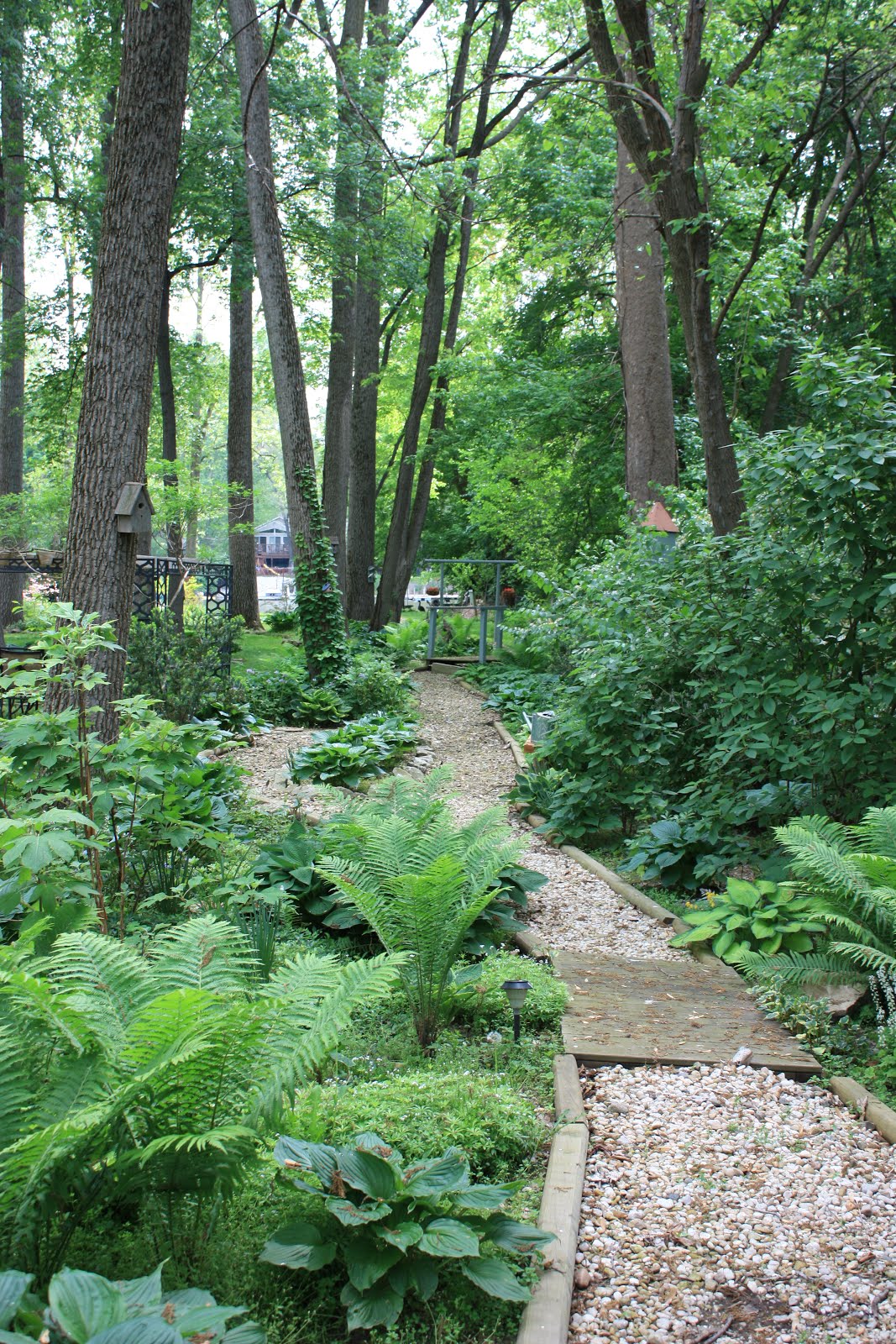
One of my favorite gardens is the Woodland Garden.  Woodland Gardens appeal to me because they are not formal, take less work to maintain and it is a garden designed to appear the way that nature would have made it.  They are relaxing, slightly unkempt, and lush with plantings. Woodland Gardens are places where you just want to sit down, watch the birds and squirrels and enjoy the life around you. 
If you have a wooded area in your landscape, consider designing a Woodland Garden.  Start with an entrance to the garden, like an arbor or gate.  Add a pathway to lead you into and around the garden.  A path can be river rock, mulch, or just dirt.
This garden can be all native plantings or it can contain selected shade loving perennials, shrubs, trees and bulbs that you like.  In my garden, I prefer a combination of natives and plants that I enjoy. I try to add plantings that add year round color in leaves, flowers and bark.  I also add early blooming shrubs and bulbs to start this garden into bloom after a long cold winter.
Plant selection is important in the Woodland Garden.  Plants need to be shade loving and able to survive in low light conditions. They also must be able to tolerate dry conditions that can occur in the summer and competition from the surrounding trees.  Here are a few of my favorite plants in my garden.
 
Annabelle Hydrangea
Assorted colors of  Hosta
Ghost Fern

Japanese Painted Fern


Forget- Me- Not
Virginia Bluebell
Assorted Foam Flowers


Oakleaf Hydrangea with fall color
Oakleaf Hydrangea with Ostrich Ferns

Variegated Solomon's Seal and native Solomon's Seal
Yellow Archangel  (AGGRESSIVE)

Assorted colors of  Hellebore for spring color
Wood Poppy
Sweet Woodruff
Marsh Marigold
Prairie Trillium
Grape Hyacinth

A shrub that I like in my garden is Witch Hazel, which can come in shades of yellow or orange for spring color. I also like  Dogwood and Red Bud trees for their spring color.  Look for shrubs and trees that have blooms and variegated leaves for added color that can be placed along the outside edge of your Woodland Garden.  Native plants that I like are Bloodroot, Mayapples, Jack in the Pulpit and Wild Ginger. Do your research on what plants are available in your area or that are native.

Next week, I plan to make a trip to the Indianapolis Home Show to visit their gardens. Check back for some new pictures of spring flowers.  Those of us who live in cold climates are ready for Spring to arrive!

Please check out "Garden Thyme with the Creative Gardener" on Facebook and check out my pins on Pinterest for more on gardening. Be a "Follower"

Happy Gardening!

Debbie


Clove Currant or Ribes odoratum


One of the first flowering shrubs to produce flowers in my garden is Ribes odoratum or Clove Currant. My plant was a small start that I received from a fellow Master Gardener several years ago. I was surprised how quickly it grew and produced flowers. The shrub blooms in April and the flowers have a wonderful fragrance that smell like cloves. The flowers on my Currant are yellow with a touch of orange in the center. This shrub will grow in partial shade but prefers sun. It is not particular about soil and any reasonable well drained garden soil will do. This is an easy plant to propagate if you want more for the garden. You can propagate by suckers, seeds or cuttings. This shrub is treated as a specimen plant but it can also be used to form hedges. They grow to about 6 -12 feet tall and spread 6 to 8 feet wide. The leaves are 3 to 5 lobed and are deciduous, turning gold in the fall. The plant does produce berries that can be used for pies, jelly or preserves. This is a great plant for a native garden and one that will attract butterflies to it's flowers and birds to it's fruits. You do need a male and female plant for fruit.
I only have the one plant and I enjoy the flowers but I don't have fruit. Clove Currant grows in zones 4 to 8.
The Creative Gardener

Great Color and Great Texture


When I was a little girl we had a Sumac in our yard. It was not very tall but it spread out very wide. We never knew what the shrub was, but it was very old and always called the "crooked tree". It offered hours of fun, bouncing and climbing on the limbs that bowed to the ground. The color in fall was stunning in colors of red, yellow and orange. The leaves were very soft to the touch. When we moved away from the house, I still remembered all the fun that we had playing on the limbs. It wasn't till I started gardening that I found out that the tree was a Staghorn sumac or Rhus typhina and a shrub. In my area you do not see many of them and I have never seen one as big as the one that grew in our yard. Several years ago I came across a Sumac in a local nursery called 'Tigereye Bailtiger'. I knew I had to have this one for my garden. The 'Tigereye Bailtiger' Sumac stays a nice lemon lime color during the summer then turns to those stunning colors that I remember as a kid.
Sumac's are easy to grow and prefer a sunny location. Any reasonable garden soil will work.
The 'Tigereye Bailtiger' grows to about 6 feet tall and wide. The female plant will produce a flower head that is hairy and dark red, which is a nice contrast to the foliage color. Sumac's do prefer a moist but well drained site. Be aware that this plant suckers and can be invasive in some areas. It can also have several different disease and insect problems like canker, powdery mildew, wood rot, scale, etc. I have not experienced any problems with mine as of yet. It is easy to propagate by cuttings, suckers or seeds. I really do enjoy the color and texture of Rhus typhina in the garden and remembering all those childhood days playing in the Sumac.

Did you Know - That Rhus typhina is a North American native shrub?


Happy Gardening!

The Creative Gardener

Beauty Berry in the Garden

Several years ago I saw this shrub growing outside of a business and it was covered in these beautiful purple berries in the dead of winter. I never forgot what it looked like and decided to identify the shrub and add it to my garden for the winter interest. Since then I have put in three Callicarpa or Beauty Berry shrubs. The leaves turn red or purple in the fall and when they drop off the berries continue to stay on the bare limbs till about Christmas time. It does produce a flower, but it is very small and nothing note worthy. Beauty Berry does not require pruning. It does prefer well drained fertile soil in a sheltered and sunny spot in the garden. This shrub can reach between 3 to 6 feet depending on the variety. There are over 140 Callicarpa species ranging from zones 5 to 12. Try this one out in your garden for next year!


The Creative Gardener

'Annabelle' Hydrangea in Pink!

Photo Courtesy of Proven Winners - http://www.provenwinners.com/


For those of you who love those beautiful white 'Annabelle' Hydrangeas, you will be happy to hear that Proven Winners now has a pink one named 'Invincibelle Spirit'. I love hydrangeas and I have many different varieties in my garden. 'Annabelle' has always been my favorite because it always produces lots of flowers even if the winter has been very cold. The flowers are huge and provide color for a long time in the garden. When I heard about 'Invincibelle Spirit', I had to check it out. I found a local nursery that will have it available this spring and it is at the top of my wish list for my garden this year.
'Invincibelle Spirit' also produces large flower heads that are just a bit smaller than 'Annabelle'. It grows in zones 3-9 and can take sun to part shade. It is very hardy and easy to grow. It produces large pink blooms from mid-summer till frost. Buds are produced on new wood, so winter die back will not keep it from producing all those beautiful flowers. It grows from 3 to 4 feet tall and wide.


Photo Courtesy of Proven Winners - http://www.provenwinners.com/


If you would like to know more about 'Invincibelle Spirit' and all the other Proven Winner plants, check out their web site on my gardening links.

Happy Gardening !


The Creative Gardener


Don't forget to pick.